Introduction
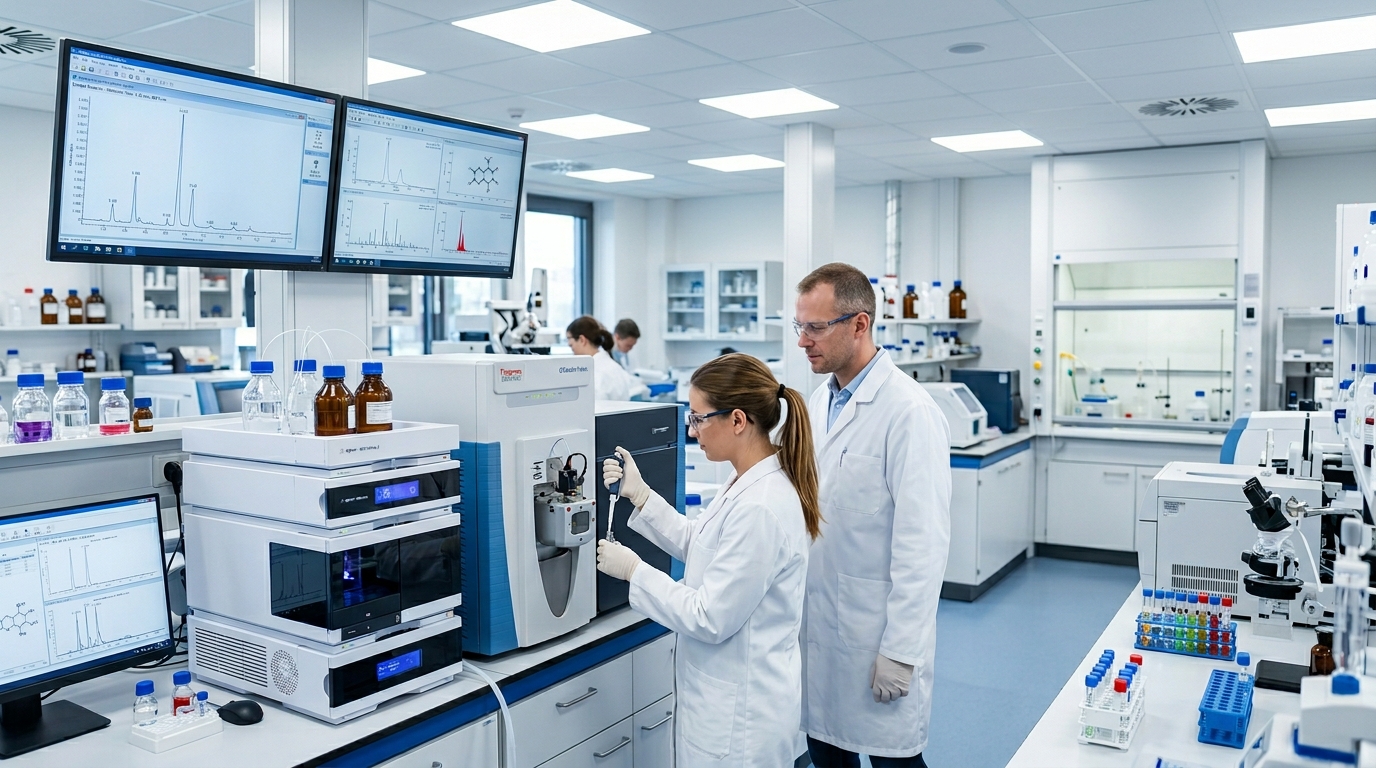
Analytical testing is a cornerstone of scientific research and quality assurance. Through advanced testing techniques, laboratories can verify the identity, purity, and consistency of research materials, ensuring reliable and reproducible experimental outcomes.
Key Points
- Analytical testing confirms compound quality.
- HPLC and Mass Spectrometry are widely used methods.
- Quality verification improves research reliability.
- Certificates of Analysis provide documented testing data.
- Consistent testing supports scientific transparency.
Why Analytical Testing Is Important
Accurate testing allows researchers to validate the materials used in scientific studies. Without proper verification, impurities or inconsistencies may compromise experimental results and affect the credibility of research findings.
Analytical testing helps laboratories:
- Confirm compound specifications.
- Detect contaminants and impurities.
- Maintain quality standards.
- Support reproducibility.
- Improve confidence in research outcomes.
Common Analytical Methods
High-Performance Liquid Chromatography (HPLC)
HPLC is commonly used to assess compound purity by separating sample components and measuring their concentrations.
Advantages include:
- Accurate purity assessment.
- Reliable impurity detection.
- High reproducibility.
- Detailed analytical reporting.
Mass Spectrometry (MS)
Mass Spectrometry provides precise molecular identification by analyzing mass-to-charge ratios.
Key benefits:
- Molecular weight confirmation.
- Structural verification.
- High analytical sensitivity.
- Detailed compound characterization.
Certificates of Analysis (COAs)
Certificates of Analysis serve as official records of analytical testing results. These documents provide essential information about a compound's quality and testing history.
Typical COA information includes:
- Product identification.
- Batch number.
- Purity results.
- Analytical methods used.
- Quality verification data.
Researchers often review COAs before initiating experiments to ensure materials meet required specifications.
Conclusion
Analytical testing remains an essential component of scientific research. Through rigorous verification methods and comprehensive documentation, laboratories can maintain high standards of quality, accuracy, and reliability. As research continues to advance, analytical testing will remain a critical tool for supporting scientific excellence and innovation.