
Pinealon 20mg

Pinealon 20mg
Pinealon is a synthetic tripeptide bioregulator (Glu-Asp-Arg) developed as part of Professor Vladimir Khavinson's extensive peptide research program. This neuroprotective peptide is studied for its ability to protect neurons from oxidative stress, support
|
Vial Size
|
Dose Range
|
Schedule
|
Primary Goal
|
|---|---|---|---|
| 10 mg vial | 1.0 to 2.0 mg daily with gradual titration. | Daily subcutaneous injections for 10 to 20 days (extendable to 28 days). | Support neuroprotection, cognitive function, and cellular resilience in brain tissue through peptide bioregulation. |
Reconstitution Summary
Storage Summary
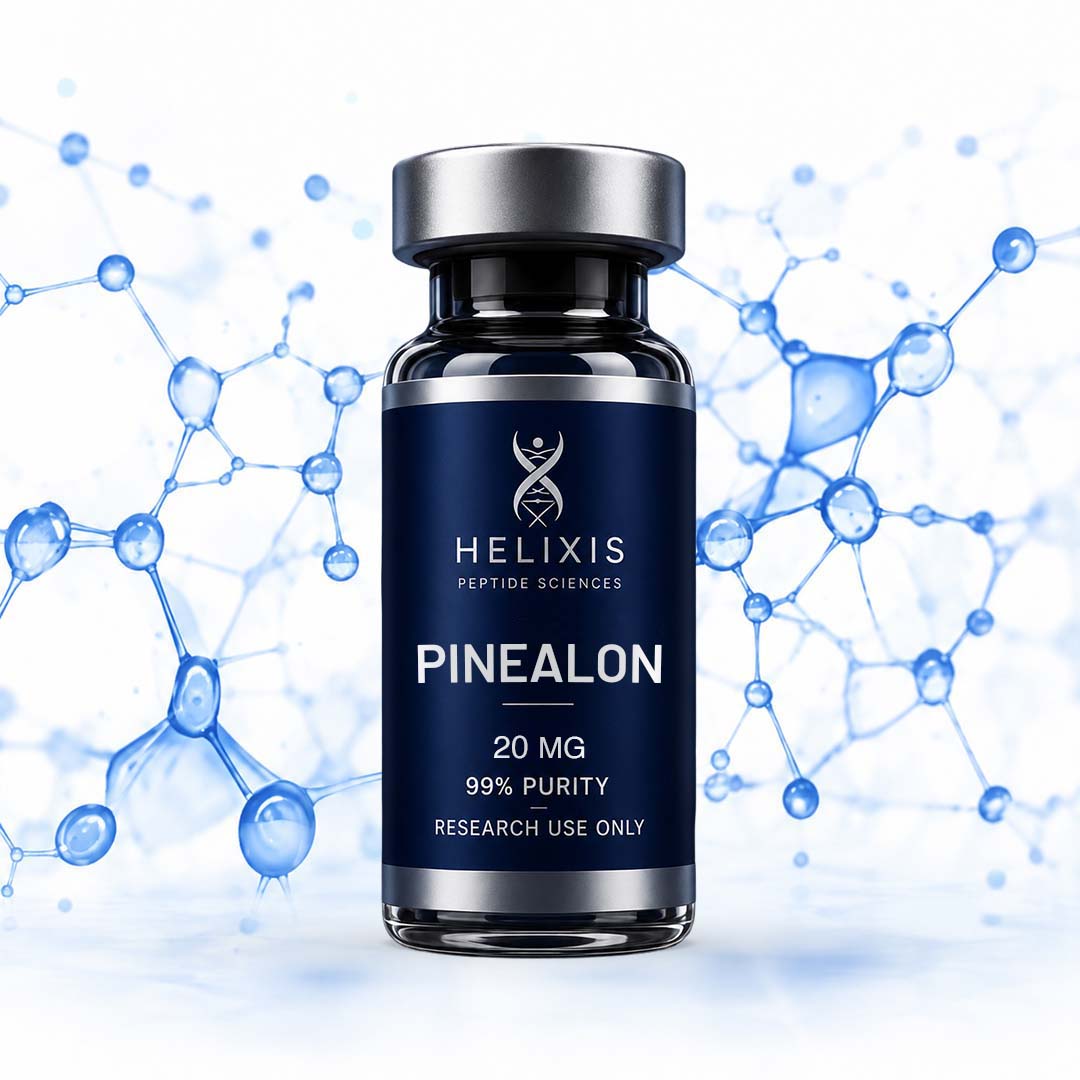
Pinealon 20mg
Reconstitution Steps
- Draw 1 mL bacteriostatic water with a sterile syringe.
- Inject slowly down the vial wall; avoid foaming.
- Gently swirl until dissolved (do not shake).
- Label and refrigerate at 2 to 8 °C, protected from light. At 10 mg/mL, 1 unit = 0.01 mL = 50 mcg on a U-100 insulin syringe.
How It Works
Pinealon is a synthetic tripeptide that appears to cross cellular and nuclear membranes to interact directly with DNA, thereby regulating gene expression in brain tissue. Research indicates it reduces reactive oxygen species accumulation and necrotic cell death in neurons while modulating the cell cycle to activate proliferative pathways. Preclinical studies demonstrate neuroprotective effects against oxidative stress, ischemic injury, and cognitive decline, with improvements in memory retention and learning capacity observed in animal models. Clinical trials in humans with traumatic brain injury and cerebral disorders have reported improvements in memory, attention, cognitive function, and emotional stability with daily administration of oral or injectable Pinealo
Benefits & Side Effects
- Neuroprotective effects through reduction of oxidative stress and preservation of neuronal viability.
- Improvements in memory, learning capacity, and cognitive function in both animal and human studies.
- Modulation of caspase-3 activity may reduce apoptosis in neurons and other tissues.
- Potential support for circadian rhythm regulation and pineal gland function.
- Generally well tolerated; occasional mild injection-site reactions (redness, itching) may occur with
subcutaneous administration.
References & Scientific Literature
- Khavinson, Anisimov. Peptide bioregulation of aging: 35-year research overview (Biogerontology).
- Pinealon increases cell viability by suppressing ROS and activating proliferation (Rejuvenation Research).
- Pinealon protects rat offspring from prenatal hyperhomocysteinemia and cognitive deficits (PMC).
- Effects of synthetic peptides in patients with chronic polymorbidity and organic brain syndrome (PubMed).