
MOTS-C 10mg

MOTS-C 10mg
MOTS-c is a 16 amino acid mitochondrial-derived peptide (MDP) that acts as a metabolic regulator, primarily through AMPK activation. Preclinical studies show it enhances insulin sensitivity, promotes fat oxidation, improves exercise capacity,
|
Vial Size
|
Dose Range
|
Schedule
|
Primary Goal
|
|---|---|---|---|
| 10mg vial | 200 to 1,000 mcg daily with gradual titration over 10 weeks. | Daily subcutaneous injections for 8 to 12 weeks (extend to 16 weeks if desired). | Support metabolic homeostasis, insulin sensitivity, and age-related physical performance based on preclinical evidence. |
Reconstitution Summary
Storage Summary
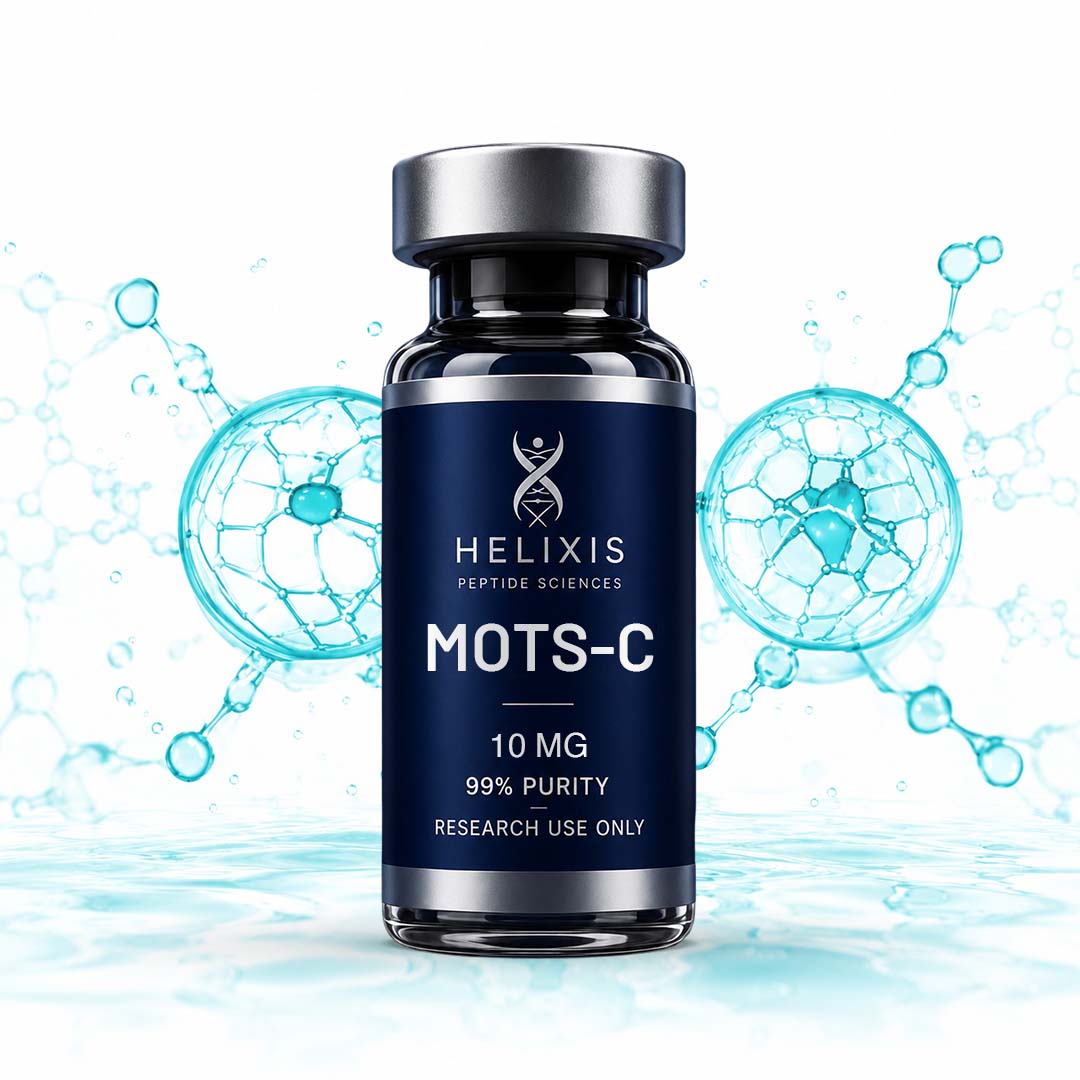
MOTS-C 10mg
Reconstitution Steps
- Draw 1 mL bacteriostatic water with a sterile syringe.
- Inject slowly down the vial wall; avoid foaming.
- Gently swirl until dissolved (do not shake vigorously).
- Label with reconstitution date and refrigerate at 2 to 8 °C, protected from light.
- Use within 7 days for optimal potency. At 10 mg/mL, 1 unit = 0.01 mL » 100 mcg on a U-100 insulin syringe.
How It Works
MOTS-c functions as a metabolic stress signal that helps optimize energy usage during nutrient stress or exercise. Its primary mechanism is AMPK activation through inhibition of the folate cycle, causing accumulation of AICAR (an AMP analog). Activated AMPK shifts cells into an energy-efficient mode: enhancing glucose uptake, fatty-acid oxidation, and mitochondrial respiration while downregulating fat storage and gluconeogenesis. MOTS-c can also translocate to the cell nucleus under stress conditions and upregulate antioxidant and stress-response genes. This retrograde signaling from mitochondria to nucleus increases expression of cytoprotective enzymes, helping cells cope with oxidative stress. Research indicates MOTS-c may also modulate mTOR and inflammatory pathways, contributing to lifespan and healthspan effects. Its actions resemble those of exercise and metformin at a cellular level.
Benefits & Side Effects
- Metabolic Health: Improves insulin sensitivity and glucose metabolism in mouse models; prevents
diet-induced insulin resistance. - Weight & Fat Reduction: Prevents obesity and reduces visceral fat in obese mice through increased
energy expenditure and fat oxidation. - Post-Menopausal Metabolism: Mitigates metabolic decline in ovariectomized mice; prevents
menopause-related fat gain and insulin resistance. - Physical Performance: Enhances exercise capacity and counters age-related frailty; old mice ran 2
times longer on treadmill tests. - Organ Protection: Reduces liver fat accumulation, improves cardiac function, and may support cognitive function in preliminary studies.
- Bone & Immunity: Promotes osteoblast activity, inhibits osteoclast formation; modulates immune aging.
- Safety: No adverse effects reported in preclinical studies; human tolerability unknown. A modified analog (CB4211) showed good tolerability in a Phase 1 trial.
- Note: these benefits have been demonstrated only in controlled research settings (mice or cells).
Translation to humans requires clinical studies.
References & Scientific Literature
- Lee C, Zeng J, Drew BG et al. MOTS-c promotes metabolic homeostasis and reduces obesity and insulin resistance (Cell Metabolism, 2015).
- Wan W et al. MOTS-c: effects and mechanisms related to stress, metabolism and aging (J Translational Medicine, 2023).
- Reynolds JC et al. MOTS-c is an exercise-induced regulator of age-dependent physical decline (Nature Communications, 2021).
- MOTS-c, the Most Recent Mitochondrial Derived Peptide in Human Aging (Int J Mol Sci, 2022).