
Thymalin

Thymalin
Thymalin is a thymus-derived polypeptide preparation investigated for its effects on immune-system function, T-lymphocyte activity, and cellular differentiation
|
Vial Size
|
Dose Range
|
Schedule
|
Primary Goal
|
|---|---|---|---|
| 10mg vial | Research-use dose should be determined according to the specific experimental model and product formulation. | Study-dependent administration according to the experimental protocol. | Support research into immune regulation, T-cell activity, and thymic function. |
Reconstitution Summary
Reconstitute according to the product-specific Certificate of Analysis and manufacturer instructions.
Storage Summary
Lyophilized; store according to product specifications. After reconstitution, refrigerate as directed and avoid repeated freeze-thaw cycles.
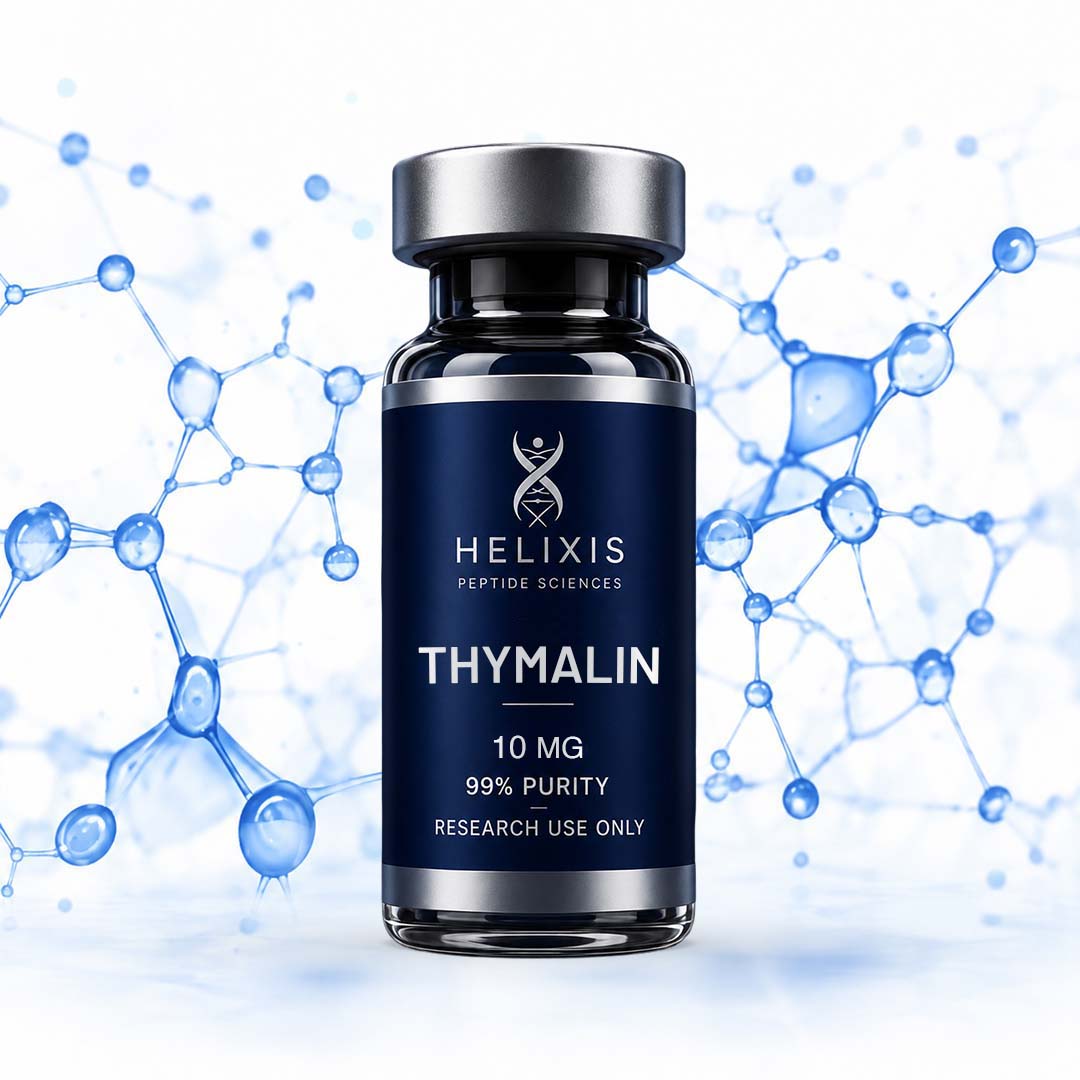
Recommended Product
Thymalin
Reconstitution Steps
-
Review the product-specific Certificate of Analysis before reconstitution.
-
Use the specified sterile diluent and volume.
-
Add the diluent slowly down the vial wall.
-
Gently swirl until dissolved; do not shake vigorously.
-
Refrigerate the reconstituted preparation according to product specifications.
How It Works
Thymalin is a thymus-derived polypeptide preparation that has been investigated for its effects on immune regulation and lymphocyte differentiation. Research has reported effects on T-lymphocyte functional activity and markers associated with immune-cell maturation.
Benefits & Side Effects
- Investigated for immune-system regulation.
- Studied in relation to T-lymphocyte differentiation and activity.
- Research has examined its role in immune recovery and cellular function.
- Investigated in aging and gerontology research.
- Reported effects and safety findings are dependent on the formulation, population, and research protocol.
References & Scientific Literature
- Experimental and clinical study of the thymus polypeptide factor thymalin.
- The effect of thymalin on biochemical and immunological indices of lymphocyte differentiation and functional activity.
- Thymalin: Activation of Differentiation of Human Hematopoietic Stem Cells.
- Peptides of pineal gland and thymus prolong human life.
- Geroprotective effect of thymalin and epithalamin