
Sermorelin 5mg

Sermorelin 5mg
Sermorelin is a synthetic growth hormone-releasing hormone (GHRH) analog that stimulates endogenous pituitary GH secretion. Originally approved for pediatric growth hormone deficiency, it is studied for adult off-label use to support physiologic.
|
Vial Size
|
Dose Range
|
Schedule
|
Primary Goal
|
|---|---|---|---|
| 5mg vial | 200 to 500 mcg daily (adult research range; pediatric: 30 mcg/kg nightly). | Daily subcutaneous injections at bedtime for 3 to 6 months (pediatric trials ran 6 to 12 months). | Stimulate endogenous pituitary GH release to support physiologic IGF-1 levels and anabolic processes. |
Reconstitution Summary
Storage Summary
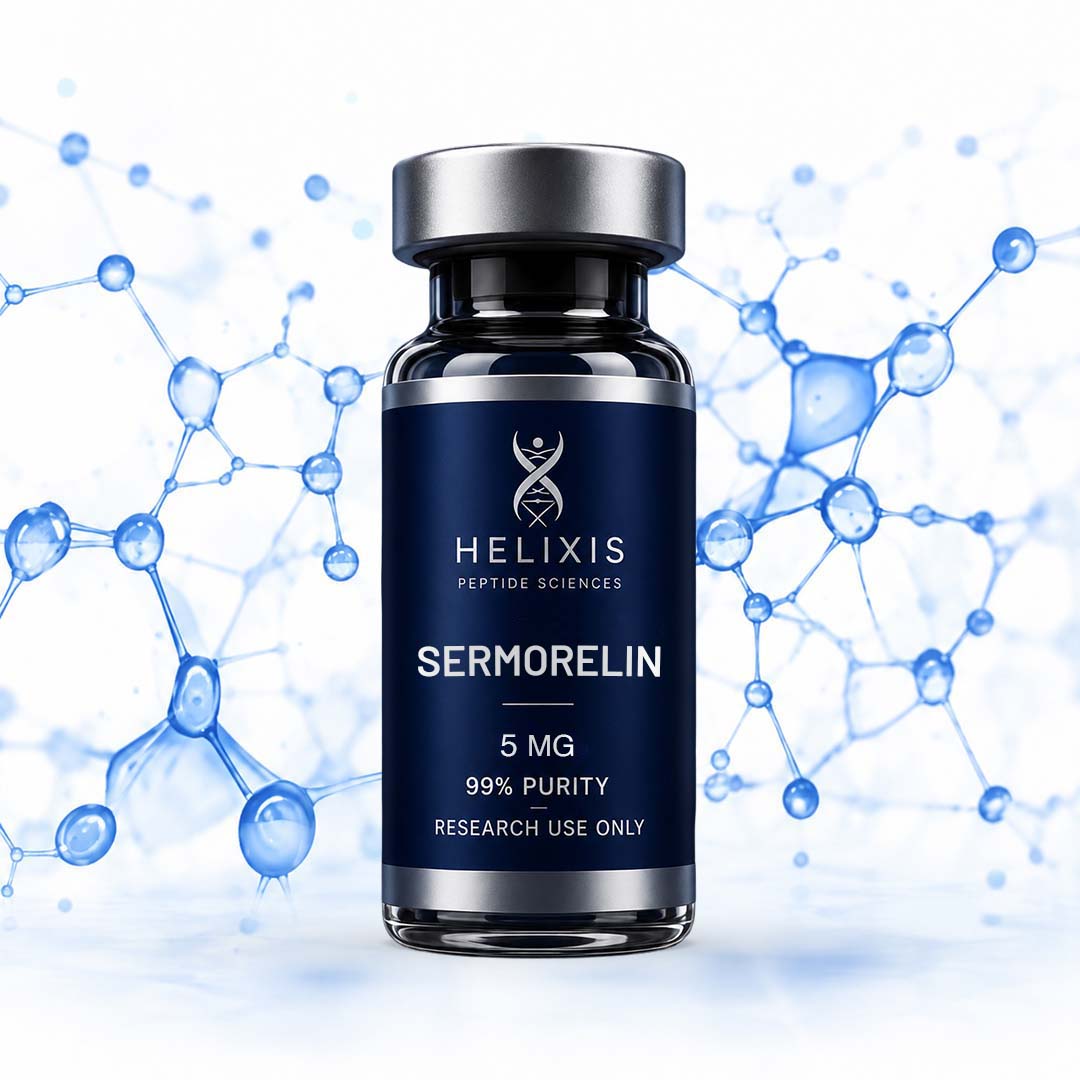
Sermorelin 5mg
Reconstitution Steps
- Draw 0.5 mL bacteriostatic water with a sterile syringe.
- Inject slowly down the vial wall; gently swirl to dissolve (do not shake vigorously).
- Label with reconstitution date and refrigerate at 2 to 8 °C, protected from light.
- Wipe vial stopper with alcohol before each use; use a new sterile needle and syringe for each injection. At 10 mg/mL, 1 unit = 0.01 mL » 100 mcg on a U-100 insulin syringe.
How It Works
Sermorelin is a synthetic analog of growth hormone-releasing hormone (GHRH) that binds to GHRH receptors on pituitary somatotropes, stimulating endogenous pulsatile GH secretion. Unlike exogenous GH administration, sermorelin preserves physiologic feedback loops: GH release is subject to normal negative feedback via somatostatin and IGF-1, reducing the risk of excessive GH or IGF-1 levels. This pulsatile GH output then promotes hepatic and peripheral IGF-1 production, supporting anabolic processes such as protein synthesis, lipolysis, and tissue repair. Pediatric studies in idiopathic GH deficiency demonstrated significant improvements in height velocity over 6 to 12 months of nightly subcutaneous therapy at 30 mcg/kg. In adults, off-label use aims to restore age-related declines in GH output, though robust adult trial data are limited. Sermorelin requires a functional pituitary to be effective and will not work in cases of pituitary damage or primary GH gene defects.
Benefits & Side Effects
- Stimulates endogenous pulsatile GH release, supporting physiologic IGF-1 elevation.
Pediatric GH deficiency: significant improvements in height velocity and growth parameters over 6 to
12 months. - Adults (off-label): may support favorable changes in body composition, energy, recovery, and metabolic
markers (evidence limited; effects more modest than direct GH therapy). - Preserves physiologic feedback, reducing risk of supraphysiologic GH or IGF-1 levels compared to
exogenous GH. - Injection-site reactions: transient redness, pain, or swelling at injection site (~17% incidence in trials).
- Rare systemic effects (under 1%): headache, flushing, dizziness, hyperactivity, drowsiness, or hives.
Thyroid considerations: ~6.5% of patients developed subclinical hypothyroidism in one study;
untreated hypothyroidism can blunt GH response. - No serious acromegaly, hypoglycemia, or excessive IGF-1 elevations reported at recommended
dosages.
References & Scientific Literature
- Prakash & Goa. Sermorelin: review of its use in the diagnosis and treatment of children with idiopathic GHD (1999).
- Sermorelin Acetate Injection Monograph: dosing, reconstitution, storage, administration (RxList).
- Mayo Clinic: Sermorelin (injection route) Proper Use and Storage.
- Sermorelin mechanism: stimulates endogenous pulsatile GH via GHRH receptors (PubMed)