
GHRP-6 5mg

GHRP-6 5mg
GHRP-6 (Growth Hormone-Releasing Peptide 6) is a synthetic hexapeptide that functions as a potent growth hormone secretagogue by binding to the ghrelin receptor (GHS-R1a). It stimulates pulsatile GH release from the pituitary gland while maintaining.
|
Vial Size
|
Dose Range
|
Schedule
|
Primary Goal
|
|---|---|---|---|
| 5 mg vial | 100 to 300 mcg per injection with gradual titration (300 to 900 mcg total daily). | Three subcutaneous injections daily for 8 to 12 weeks, spaced at least 4 hours apart. | Stimulate pulsatile GH release to support muscle growth, fat loss, and recovery. |
Reconstitution Summary
Storage Summary
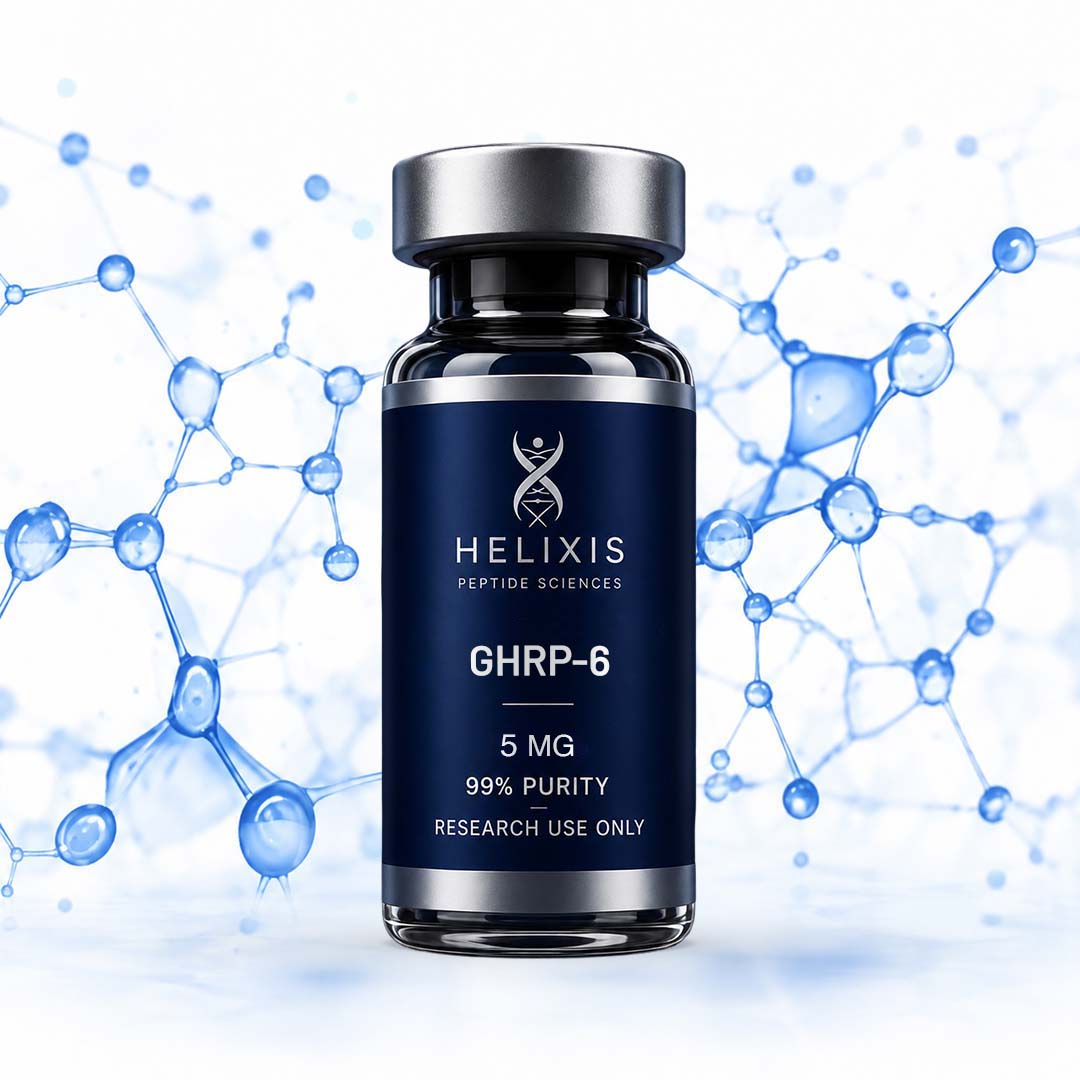
GHRP-6 5mg
Reconstitution Steps
- Draw 0.5 mL bacteriostatic water with a sterile syringe.
- Inject slowly down the vial wall to avoid foaming; do not shake.
- Gently swirl or roll the vial until the powder is completely dissolved.
- Label with date and concentration; refrigerate at 2 to 8 °C, protected from light.
- Use within 7 days of reconstitution for optimal potency. At 10 mg/mL, 1 unit = 0.01 mL » 100 mcg on a U-100 insulin syringe.
How It Works
GHRP-6 functions as a synthetic ghrelin mimetic by binding to the growth hormone secretagogue receptor (GHS-R1a) in the pituitary gland and hypothalamus. This activation triggers acute, pulsatile growth hormone release from somatotroph cells while simultaneously reducing somatostatin’s inhibitory brake on GH secretion. Unlike continuous GH administration, GHRP-6 maintains physiological feedback controls: as GH and IGF-1 levels rise, endogenous somatostatin increases to prevent excessive elevation, keeping GH pulses within normal physiologic ranges. Beyond its endocrine effects, GHRP-6 exhibits cytoprotective properties through interactions with the CD36 receptor on immune and muscle cells. This secondary pathway activates cell-survival signaling cascades (such as PI3K/Akt) that help protect tissues from oxidative stress and inflammation, explaining many of GHRP-6’s observed tissue-protective benefits in preclinical models including
Benefits & Side Effects
- Muscle Growth & Fat Loss: Elevated GH and IGF-1 levels support increased lean body mass and
reduced fat mass over time. - Enhanced Recovery: Improved sleep architecture (increased slow-wave sleep) and faster tissue repair. Appetite Stimulation: May increase hunger due to ghrelin receptor activation, potentially beneficial for weight gain goals.
- Tissue Protection: Preclinical studies show cytoprotective effects including reduced scar formation,
cardioprotection, and neuroprotection. - Joint & Connective Tissue Health: May support collagen synthesis and connective tissue repair
through elevated IGF-1. - Transient mild increases in cortisol and ACTH (typically not clinically significant).
Increased appetite and potential water retention. - Occasional injection-site reactions (redness, itching, mild swelling).
- Possible transient dizziness or flushed feeling immediately after injection due to rapid GH spike.
- Generally well-tolerated in human trials at research doses with no major safety concerns reported.
References & Scientific Literature
- Growth hormone-releasing peptides: comprehensive review of GHRP mechanisms (European Journal of Endocrinology, 1997).
- Synthetic GHRPs: historical appraisal of cytoprotective effects and mechanisms (Clinical Medicine Insights: Cardiology, 2017).
- Pharmacokinetic study of GHRP-6 in healthy male volunteers (European Journal of Pharmaceutical Sciences, 2013).
- GHRP-6 prevents cutaneous hypertrophic scarring: proteome study (International Wound Journal, 2018).