
Glutathione

Glutathione
Glutathione (g-L-glutamyl-L-cysteinyl-glycine) is the master antioxidant tripeptide studied for cellular detoxification, oxidative stress reduction, and redox balance. As the most abundant intracellular thiol, glutathione plays a central role in neutraliz
|
Vial Size
|
Dose Range
|
Schedule
|
Primary Goal
|
|---|---|---|---|
| 10mg vial | 100 to 200 mg daily with gradual titration. | Daily or every-other-day subcutaneous injections for 4 to 8 weeks. | Support antioxidant defense, cellular detoxification, and immune function. |
Reconstitution Summary
Storage Summary
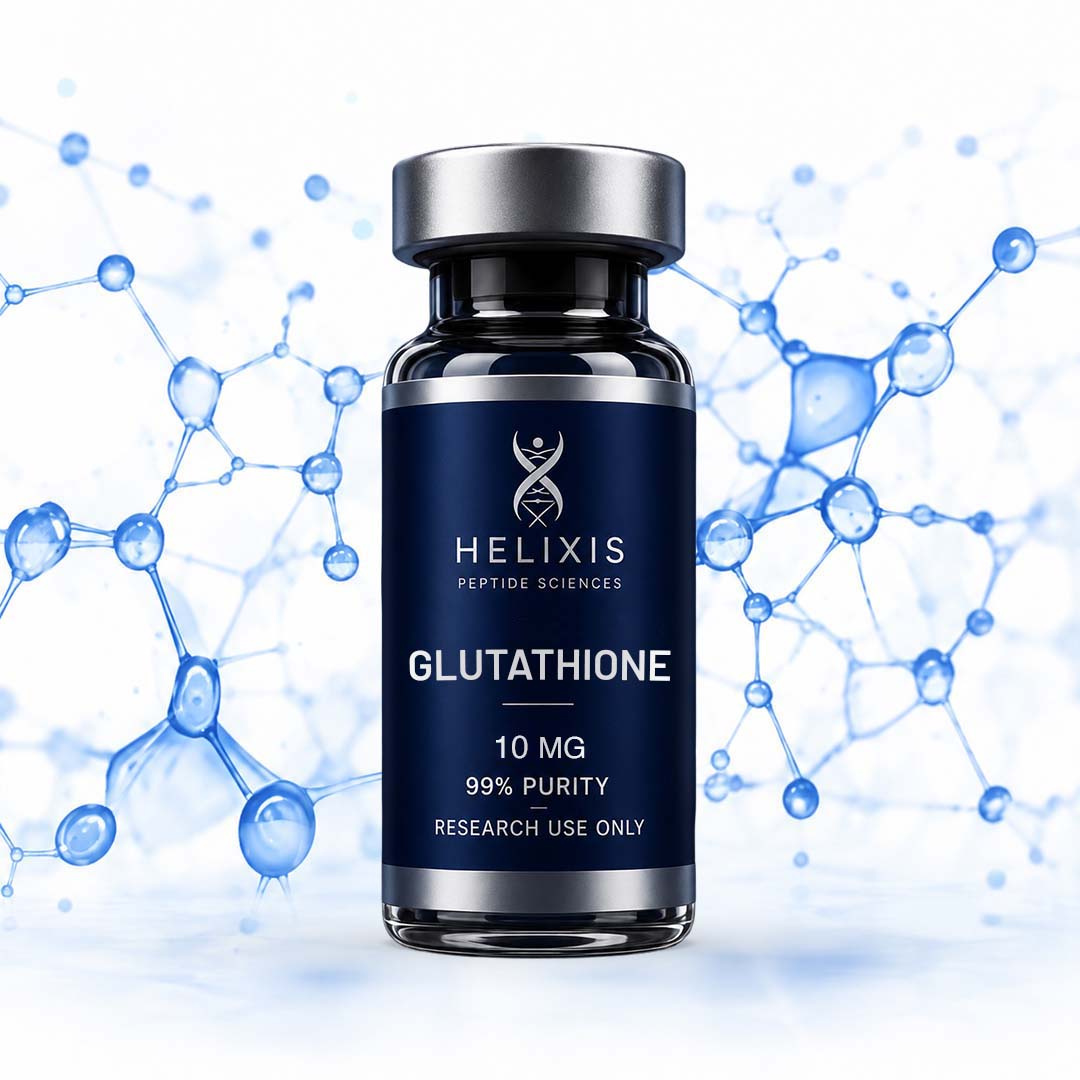
Glutathione
Reconstitution Steps
- Draw 3 mL bacteriostatic water with a sterile syringe.
- Inject slowly down the vial wall; avoid foaming.
- Gently swirl until dissolved (do not shake).
- Label and refrigerate at 2 to 8 °C, protected from light. At 500 mg/mL, 1 unit = 0.01 mL = 5 mg on a U-100 insulin syringe.
How It Works
Glutathione (GSH) is the body’s most abundant intracellular antioxidant, present in virtually every cell at concentrations of 1 to 10 mM. As a tripeptide composed of glutamate, cysteine, and glycine, it functions as the primary thiol-based redox buffer, neutralizing reactive oxygen species (ROS), supporting Phase II detoxification pathways, and facilitating the excretion of xenobiotics and heavy metals. The reduced form (GSH) donates electrons to neutralize free radicals and is then recycled back from its oxidized form (GSSG) by glutathione reductase. Clinical and preclinical research demonstrates that maintaining optimal GSH levels supports liver function, immune cell activity, mitochondrial protection, and overall cellular homeostasis.
Benefits & Side Effects
Observations from preclinical and clinical literature.
- Supports reduction of oxidative stress markers and maintenance of cellular redox balance.
- May enhance liver function and support hepatic detoxification pathways.
- Research suggests immune-modulating effects, including support for natural killer cell activity and T-cell
function. - Clinical studies on skin health indicate potential effects on melanin index and skin brightness with
sustained use. - Generally well tolerated; occasional mild injection-site reactions (redness, itch) may occur.
- Rare reports of gastrointestinal discomfort with high-dose protocols; start with lower doses and titrate
gradually.
References & Scientific Literature
- The antioxidant glutathione: protective roles, cofactor functions, and regeneration mechanisms (PubMed).
- Glutathione: roles in immune function, detoxification, and clinical applications (PMC).
- Glutathione: pharmacological aspects and implications for clinical use in NAFLD (PMC).
- Exploring safety and efficacy of glutathione supplementation: narrative review (PMC)