
KPV

KPV
KPV (Lysine-Proline-Valine) is a C-terminal tripeptide fragment of a-melanocyte-stimulating hormone (a-MSH) studied for its potent anti-inflammatory properties without melanotropic side effects. Research demonstrates KPV reduces pro-inflammatory cytokines
|
Vial Size
|
Dose Range
|
Schedule
|
Primary Goal
|
|---|---|---|---|
| 10 mg vial | 200 to 500 mcg daily with gradual weekly titration. | Daily subcutaneous injections for 8 to 12 weeks (extend to 16 weeks if desired). | Support reduction of systemic inflammation and modulate immune responses without melanotropic effects. |
Reconstitution Summary
Storage Summary
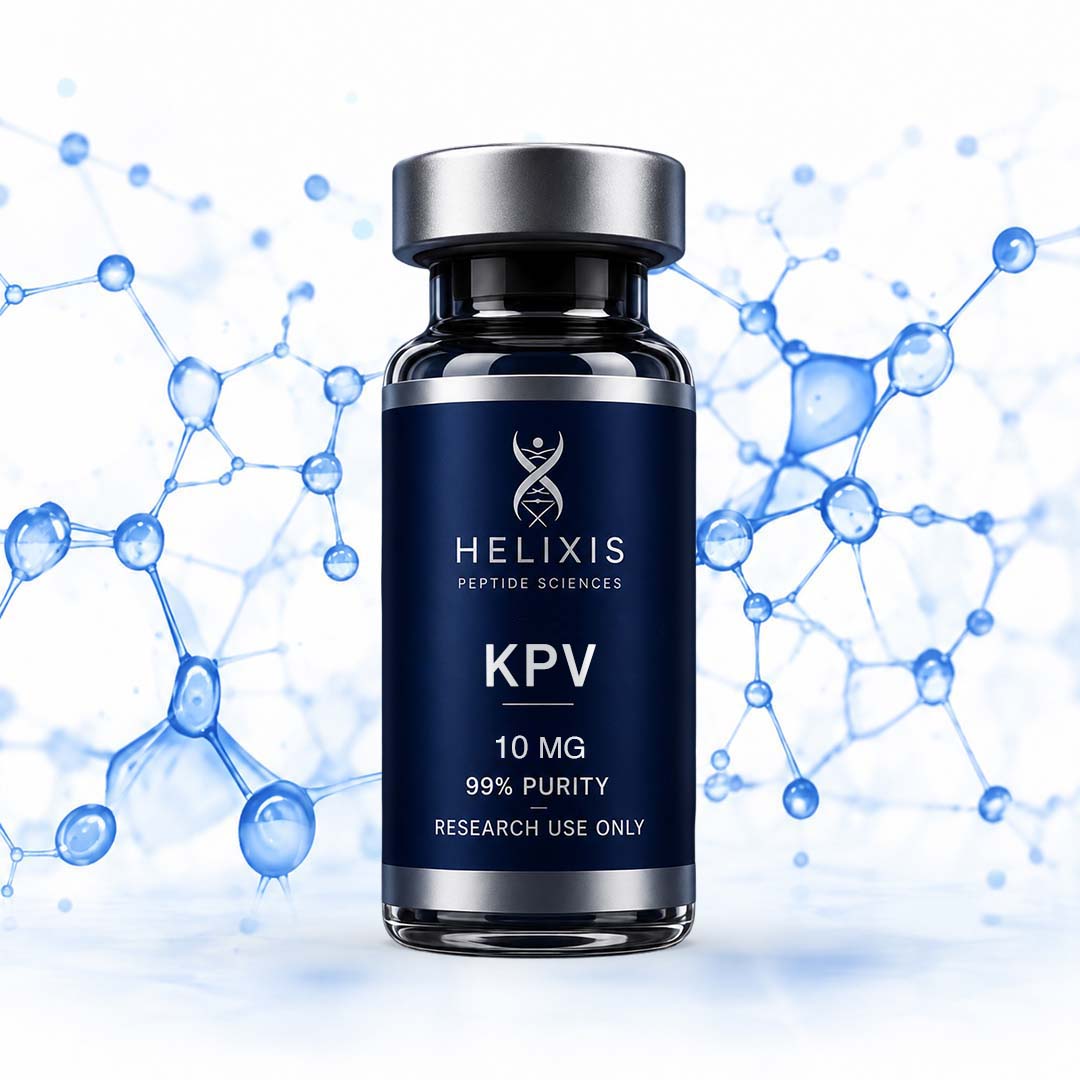
KPV 10mg
Reconstitution Steps
- Draw 1 mL bacteriostatic water with a sterile syringe.
- Inject slowly down the vial wall; avoid foaming.
- Gently swirl until dissolved (do not shake).
- Label and refrigerate at 2 to 8 °C, protected from light. At 10 mg/mL, 1 unit = 0.01 mL » 100 mcg on a U-100 insulin syringe.
How It Works
KPV is the C-terminal tripeptide sequence (residues 11-13) of a-melanocyte-stimulating hormone (a-MSH), retaining potent anti-inflammatory activity without the hormone’s melanotropic effects. Preclinical studies demonstrate KPV reduces pro-inflammatory cytokines (TNF-a, IL-6, IL-1b) and modulates immune cell activity in models of inflammatory bowel disease, colitis, and systemic inflammation. The peptide’s mechanism involves inhibition of nuclear factor kappa B (NF-kB) signaling and modulation of inflammatory mediator release. Subcutaneous administration provides systemic delivery with rapid absorption and sustained anti-inflammatory effects observed in daily dosing protocols.
Benefits & Side Effects
- Anti-inflammatory activity: Reduces pro-inflammatory cytokines and modulates immune responses in
models of inflammatory bowel disease and systemic inflammation. - Multiple routes: Oral and subcutaneous administration show activity, with subcutaneous favoured for
systemic delivery and consistent bioavailability. - Wound healing support: Preclinical data suggest KPV may support tissue repair and wound healing
processes through inflammatory modulation. - Generally well tolerated: Occasional mild injection-site reactions (redness, slight swelling) may occur;
systemic side effects are rarely reported in research protocols. - No melanotropic effects: Unlike full a-MSH, KPV does not affect melanocyte activity or skin
pigmentation.
References & Scientific Literature
- Pawar K et al. KPV as an a-MSH fragment retains anti-inflammatory activity (J Pharm Drug Delivery Research, 2022).
- Brzoska T et al. a-MSH and related tripeptides: modulation of colitis, inflammation (FASEB Journal, 2003).
- Dalmasso G et al. PepT1-mediated tripeptide KPV uptake reduces intestinal inflammation in DSS colitis (Gastroenterology, 2008).