
Semaglutide 10mg

Semaglutide 10mg
Semaglutide is a glucagon-like peptide-1 (GLP-1) receptor agonist with a prolonged half-life of approximately 7 days, approved for chronic weight management and glycemic control. The extended half-life enables once-weekly subcutaneous dosing
|
Vial Size
|
Dose Range
|
Schedule
|
Primary Goal
|
|---|---|---|---|
| 10mg vial | 250 mcg (0.25 mg) to 2400 mcg (2.4 mg) weekly with stepwise titration every 4 weeks. | Weekly subcutaneous injections for 16 to 20+ weeks with gradual dose escalation. | Support chronic weight management through GLP-1 receptor activation, leading to reduced appetite and improved metabolic parameters. |
Reconstitution Summary
Storage Summary
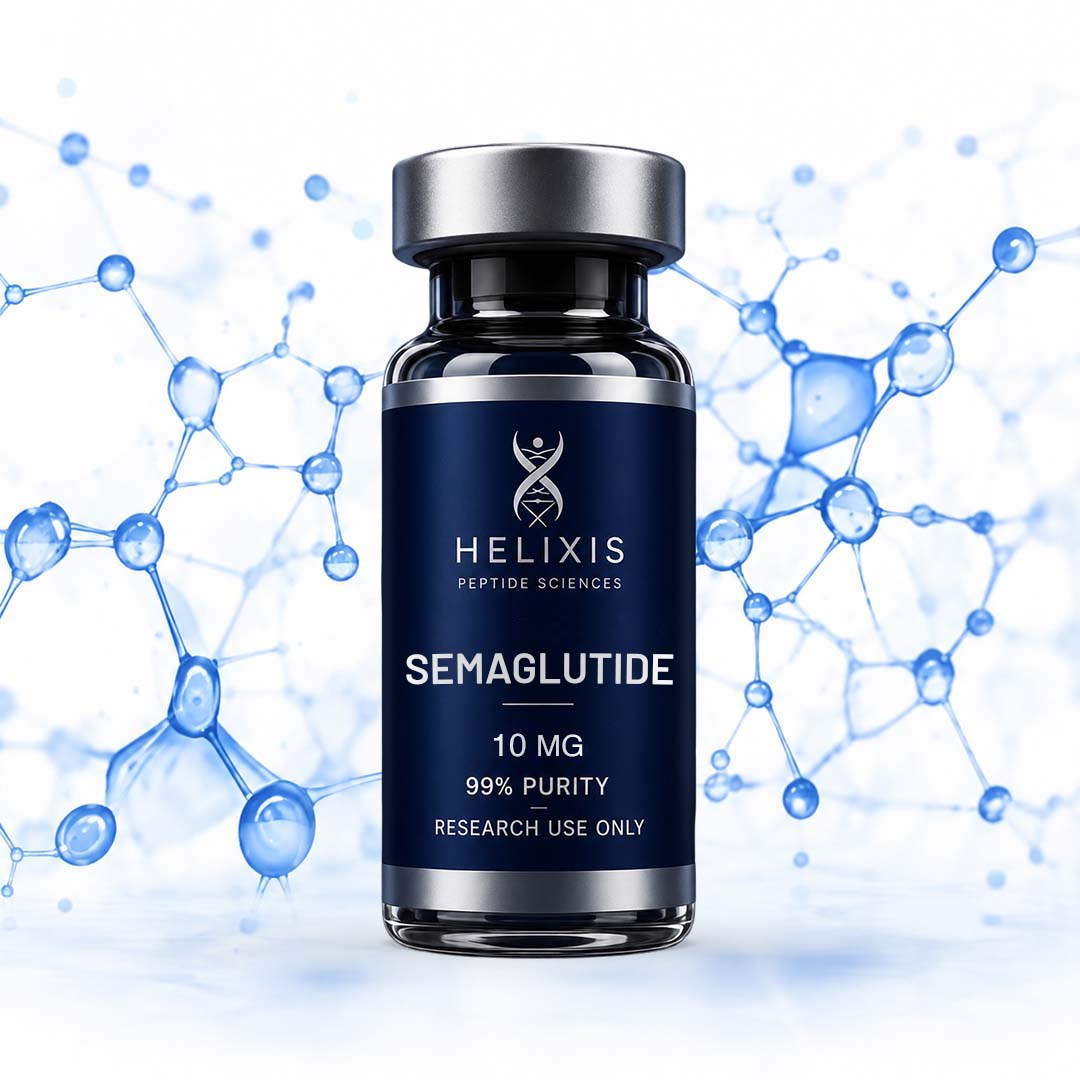
Semaglutide 10mg
Reconstitution Steps
- Draw 1 mL bacteriostatic water with a sterile syringe.
- Inject slowly down the vial wall to minimize foaming; avoid shaking.
- Gently swirl or roll the vial until the powder is fully dissolved.
- Label the vial with the reconstitution date and refrigerate at 2 to 8 °C, protected from light.
- Use reconstituted solution within 28 days for maximum potency and safety. At 10 mg/mL, 1 unit = 0.01 mL » 100 mcg on a U-100 insulin syringe.
How It Works
Semaglutide is a GLP-1 receptor agonist with 94% sequence homology to native human GLP-1. It promotes weight loss through multiple mechanisms: reducing appetite and food intake via central nervous system effects, slowing gastric emptying, and improving glycemic control through glucose-dependent insulin secretion. The extended half-life of approximately 7 days is due to albumin binding and resistance to DPP-4 degradation, enabling convenient once-weekly dosing. Clinical trials have demonstrated significant weight loss (mean 10 to 15% body weight reduction) in individuals with obesity when combined with lifestyle interventions. The weekly 2.4 mg maintenance dose is FDA-approved for chronic weight management and represents the standard clinical approach.
Benefits & Side Effects
- Significant weight loss: mean 10 to 15% body weight reduction in clinical trials at 2.4 mg weekly dose when combined with lifestyle modifications.
- Improved glycemic control: through enhanced glucose-dependent insulin secretion and reduced
glucagon secretion. - Reduced appetite: via central nervous system GLP-1 receptor activation.
- Cardiovascular benefits: demonstrated in outcome trials, including reduced risk of major adverse
cardiovascular events. - Convenient dosing: once-weekly schedule improves adherence compared to daily regimens.
GI effects (most common): nausea, vomiting, diarrhea, constipation, abdominal pain; typically mild to
moderate and decreasing with gradual dose escalation. - Injection-site reactions (redness, swelling, irritation) generally mild and transient.
Hypoglycemia risk when combined with insulin or sulfonylureas; less common with Semaglutide
monotherapy due to glucose-dependent mechanism. - Rare serious adverse events: pancreatitis, gallbladder disease, acute kidney injury; thyroid C-cell tumors observed in rodent studies (relevance to humans uncertain).
References & Scientific Literature
- Clean the vial stopper and chosen skin site with separate alcohol swabs; allow both to dry completely.
- Pinch a fold of skin; insert the needle at a 45 to 90 degree angle into subcutaneous tissue.
- Do not aspirate when giving a subcutaneous injection.
- Inject the solution slowly and steadily; wait at least 6 seconds after injection before withdrawing the needle.
- Withdraw the needle and apply light pressure with a clean swab; avoid rubbing vigorously.
- Rotate injection sites systematically (abdomen, thighs, upper arms) with each weekly injection. The abdomen is preferred for most consistent absorption.
- Dispose of used syringes and needles immediately in a proper FDA-approved sharps container.