
Tesamorelin 10mg

Tesamorelin 10mg
Tesamorelin is a synthetic 44 amino acid peptide analog of Growth Hormone-Releasing Hormone (GHRH). It stimulates endogenous growth hormone release and raises IGF-1 levels, leading to enhanced lipolysis and metabolic benefits
|
Vial Size
|
Dose Range
|
Schedule
|
Primary Goal
|
|---|---|---|---|
| 10mg vial | Daily subcutaneous injections for 12 to 26 weeks (extendable to 52 weeks with medical supervision). Dose: 2 mg (2,000 mcg) daily after Week 1 titration. | Reduce visceral adipose tissue and improve lipid profiles through sustained GH/IGF-1 elevation. |
Reconstitution Summary
Storage Summary
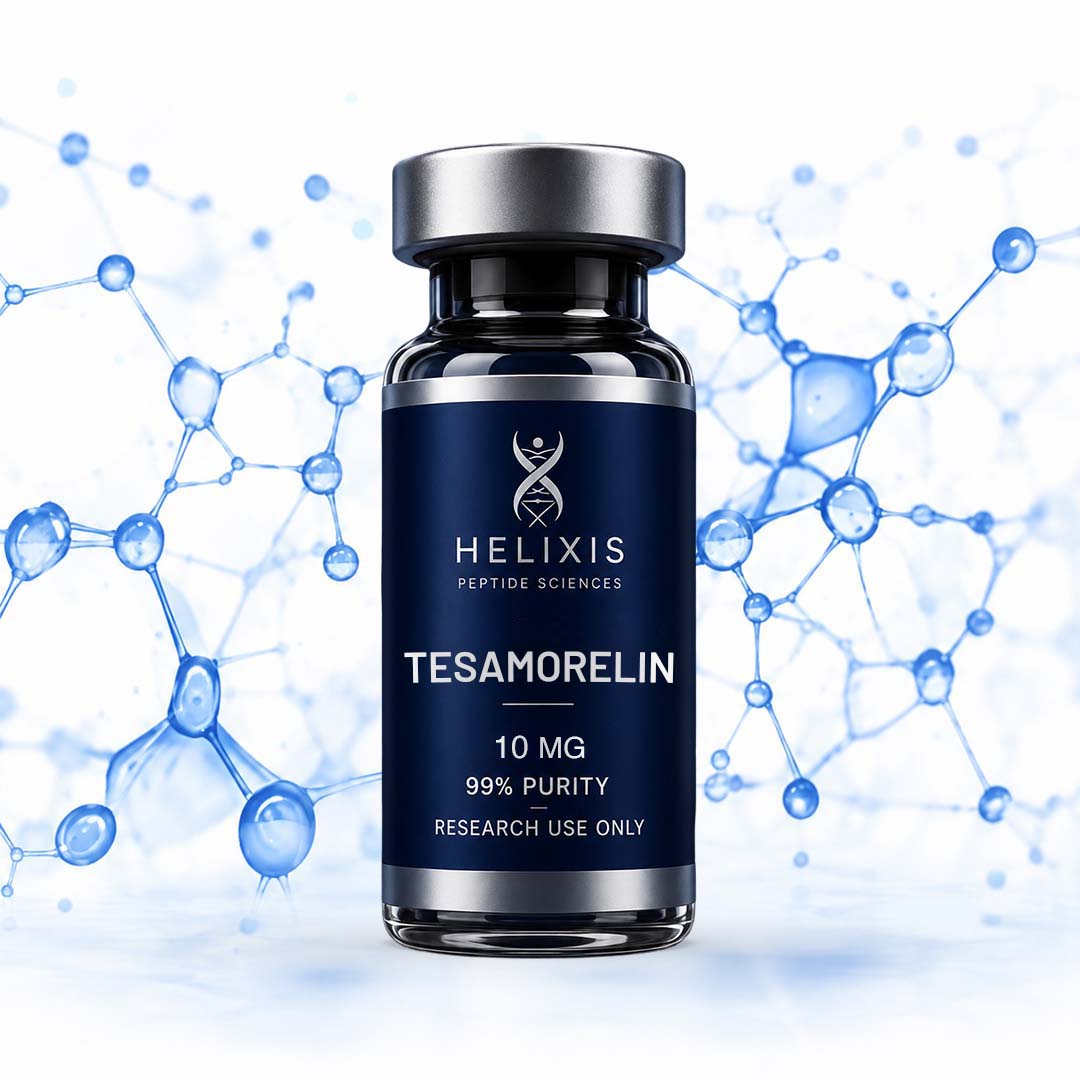
Tesamorelin 10mg
Reconstitution Steps
- Draw 1 mL bacteriostatic water with a sterile syringe.
- Inject slowly down the vial wall; avoid foaming.
- Gently swirl until dissolved (do not shake).
- Label and refrigerate at 2 to 8 °C, protected from light.
- Use within 7 days when reconstituted with bacteriostatic water. At 10 mg/mL, 1 unit = 0.01 mL » 100 mcg on a U-100 insulin syringe.
How It Works
Tesamorelin mimics natural human GHRH by binding to pituitary GHRH receptors, triggering pulsatile growth hormone secretion and consequent IGF-1 elevation. This cascade promotes lipolysis (fat breakdown), protein synthesis, and favorable metabolic shifts. In HIV-associated lipodystrophy, daily tesamorelin significantly reduces visceral adipose tissue and improves lipid profiles over 6 to 12 months. Research also explores tesamorelin’s potential to reduce liver fat in NAFLD patients and enhance cognitive function in older adults by restoring age-related GH/IGF-1 declines.
Benefits & Side Effects
- Significant reduction in visceral adipose tissue: measurable after 3 to 6 months.
- Improved lipid profiles: and potential liver fat reduction in NAFLD.
- Enhanced cognitive function: in older adults (research ongoing).
- Well-tolerated with maintained benefits during continuous use up to 52 weeks.
- Injection-site reactions: mild redness, itching, pain, or bruising at injection area.
- Musculoskeletal symptoms: joint pain, muscle aches, peripheral edema (mild swelling).
- Carpal tunnel symptoms: occasional tingling or numbness in extremities (dose-dependent, reversible).
- Metabolic monitoring: IGF-1 elevation requires monitoring; small increases in HbA1c observed in some
patients. - Contraindications: active malignancies, pregnancy, known hypersensitivity to tesamorelin or mannitol.
References & Scientific Literature
- Tesamorelin (LiverTox: NIDDK, 2018).
- Falutz J et al. Effects of tesamorelin in HIV-infected patients with excess abdominal fat (J Clin Endocrinol Metab, 2010).
- Safety and metabolic effects of tesamorelin in patients with type 2 diabetes (PLoS ONE, 2017).
- EGRIFTA SV (tesamorelin) Full Prescribing Information (Theratechnologies, FDA Label, 2024).