
Vesugen 20mg

Vesugen 20mg
Vesugen (Lys-Glu-Asp, KED) is a synthetic ultrashort tripeptide bioregulator developed by Khavinson and colleagues, studied for its effects on vascular endothelial proliferation, Ki-67 expression,
|
Vial Size
|
Dose Range
|
Schedule
|
Primary Goal
|
|---|---|---|---|
| 20mg vial | 500 mcg to 2 mg daily with gradual titration. | Daily subcutaneous injections for 8 to 12 weeks. | Support vascular endothelial function and bioregulatory gene expression. |
Reconstitution Summary
2 mL per 20 mg vial (10 mg/mL).
Storage Summary
Lyophilized frozen; reconstituted refrigerated; avoid freeze-thaw.
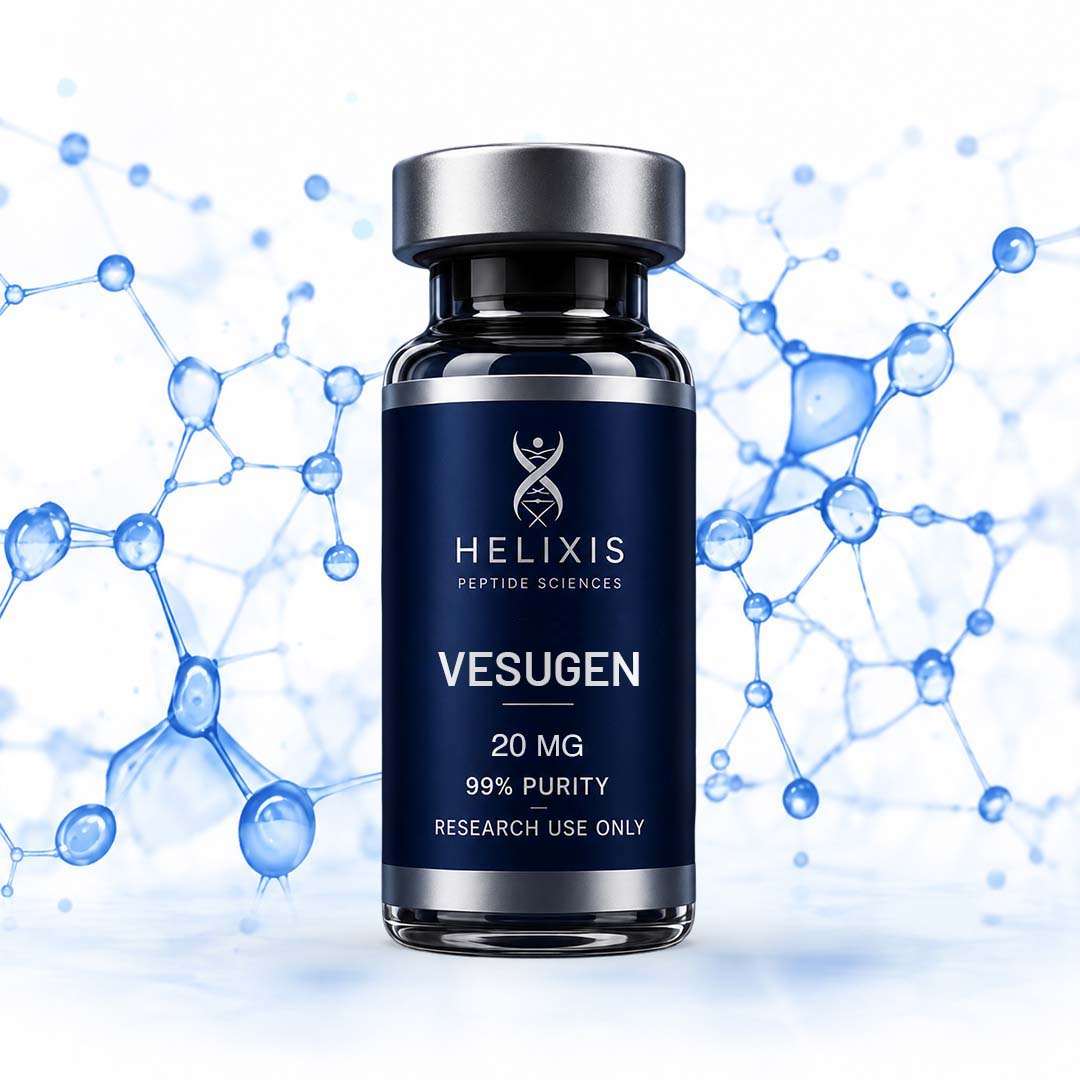
Recommended Product
Vesugen 20mg
Reconstitution Steps
- Draw 2 mL bacteriostatic water with a sterile syringe.
- Inject slowly down the vial wall; avoid foaming.
- Gently swirl until dissolved (do not shake).
- Label and refrigerate at 2 to 8 °C, protected from light. At 10 mg/mL, 1 unit = 0.01 mL » 100 mcg on a U-100 insulin syringe.
How It Works
Vesugen belongs to a class of ultrashort peptide bioregulators studied by Khavinson and colleagues. These tripeptides are proposed to enter cells and bind regulatory regions of DNA, modulating gene expression at nanomolar concentrations. Preclinical research suggests Vesugen upregulates Ki-67 (a proliferation marker) in vascular endothelium and supports the expression of genes involved in vascular homeostasis and angiogenesis. Human clinical data remain limited; most evidence is from in vitro and rodent studies.
Benefits & Side Effects
- Preclinical models suggest support for vascular endothelial proliferation and function.
- May modulate aging-related gene expression markers in vascular tissue.
- Ultrashort peptides of this class generally exhibit favorable tolerability profiles in preclinical work.
- Human safety and efficacy data remain limited; mild injection-site reactions (redness, itch) may occur.
References & Scientific Literature
- Khavinson VK. Peptides and Ageing (review of bioregulatory peptide mechanisms).
- Khavinson VK et al. Peptide regulation of gene expression: systematic review.