
GHK-CU

GHK-CU
tissue repair. GHK-Cu dosage protocols utilize this naturally occurring copper-binding tripeptide (glycyl-L-histidyl-L-lysine) to support skin rejuvenation, wound healing, and tissue repair. GHK-Cu stimulates collagen and elastin production, promotes angi
|
Vial Size
|
Dose Range
|
Schedule
|
Primary Goal
|
|---|---|---|---|
| 50 mg vial | 1 to 2 mg daily with gradual titration. | Daily subcutaneous injections, 5 days on / 2 days off, for 8 to 12 weeks. | Support skin rejuvenation, collagen synthesis, wound healing, and anti-aging tissue repair. |
Reconstitution Summary
Storage Summary
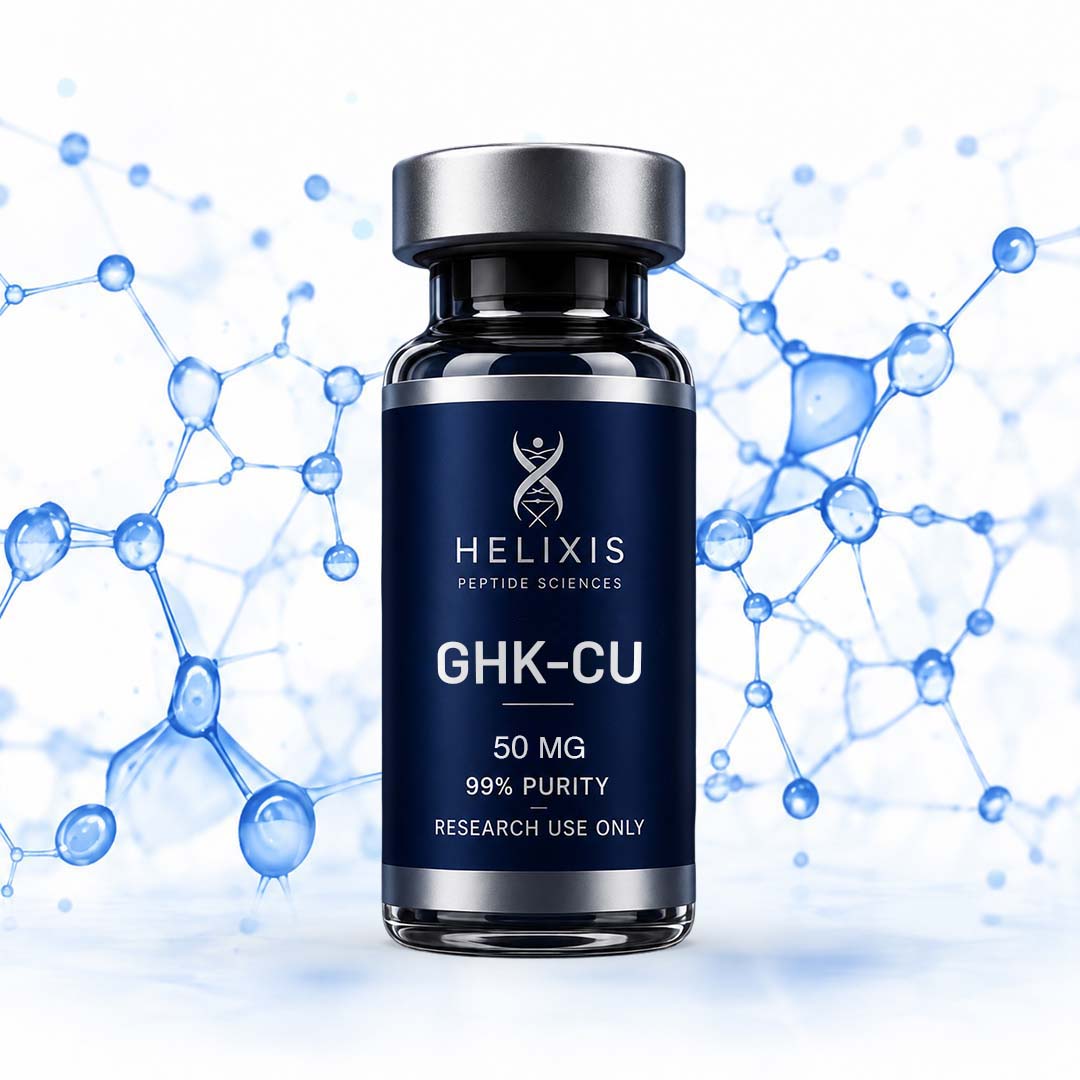
GHK-CU 50mg
Reconstitution Steps
- Draw 2.5 mL of bacteriostatic water with a sterile syringe.
- Inject slowly down the vial wall; avoid foaming.
- Gently swirl or roll until dissolved (do not shake).
- Label and refrigerate at 2 to 8 °C, protected from light; use within 30 days. At 20 mg/mL, 1 unit = 0.01 mL » 200 mcg on a U-100 insulin syringe.
How It Works
GHK-Cu functions as a signal peptide that triggers tissue repair processes by chelating copper(II) ions and delivering this essential trace metal to cells in a bioavailable form. Copper is a critical cofactor for enzymes involved in collagen synthesis (lysyl oxidase) and antioxidant defense (superoxide dismutase). Genomic studies show GHK-Cu modulates over 30% of human genes toward a regenerative, anti-aging phenotype. The peptide stimulates production of VEGF and bFGF in fibroblasts, promoting angiogenesis and blood flow to injured tissue. GHK-Cu also recruits immune cells to injury sites, increases collagen, elastin, and glycosaminoglycan synthesis, and regulates matrix metalloproteinases for balanced tissue remo
Benefits & Side Effects
- Skin Rejuvenation: Clinical studies show increased skin thickness, improved dermal collagen density,
and reduced wrinkle depth. - Wound Healing: Promotes angiogenesis, granulation tissue formation, and accelerated wound closure
in preclinical models. - Anti-Inflammatory: Suppresses pro-inflammatory cytokines (TNF-alpha, IL-6) and provides antioxidant
protection. - Hair Growth: Observed to enlarge hair follicle size and increase growth rate in studies.
Safety Profile: Excellent tolerability with no serious adverse effects noted; extremely wide safety margin
in toxicology studies. - Occasional mild injection-site reactions (transient redness or stinging) may occur with subcutaneous
administration.
References & Scientific Literature
- Pickart L. The human tripeptide GHK and tissue remodeling (review).
- Pickart L, Vasquez-Soltero JM, Margolina A. GHK Peptide as a Natural Modulator of Multiple Cellular Pathways in Skin Regeneration.