
LL-37

LL-37
LL-37 (also known as CAP-18) is a 37 amino acid cationic antimicrobial peptide derived from the C-terminal of human cathelicidin (hCAP18). It is the only known human cathelicidin, exhibiting broad-spectrum antibacterial activity and immune-modulating prop
|
Vial Size
|
Dose Range
|
Schedule
|
Primary Goal
|
|---|---|---|---|
| 5 mg vial | 50 to 400 mcg daily with gradual titration. | Daily subcutaneous injections for 8 to 12 weeks (extend to 16 weeks if desired). | Support antimicrobial defense and wound-healing processes. |
Reconstitution Summary
Storage Summary
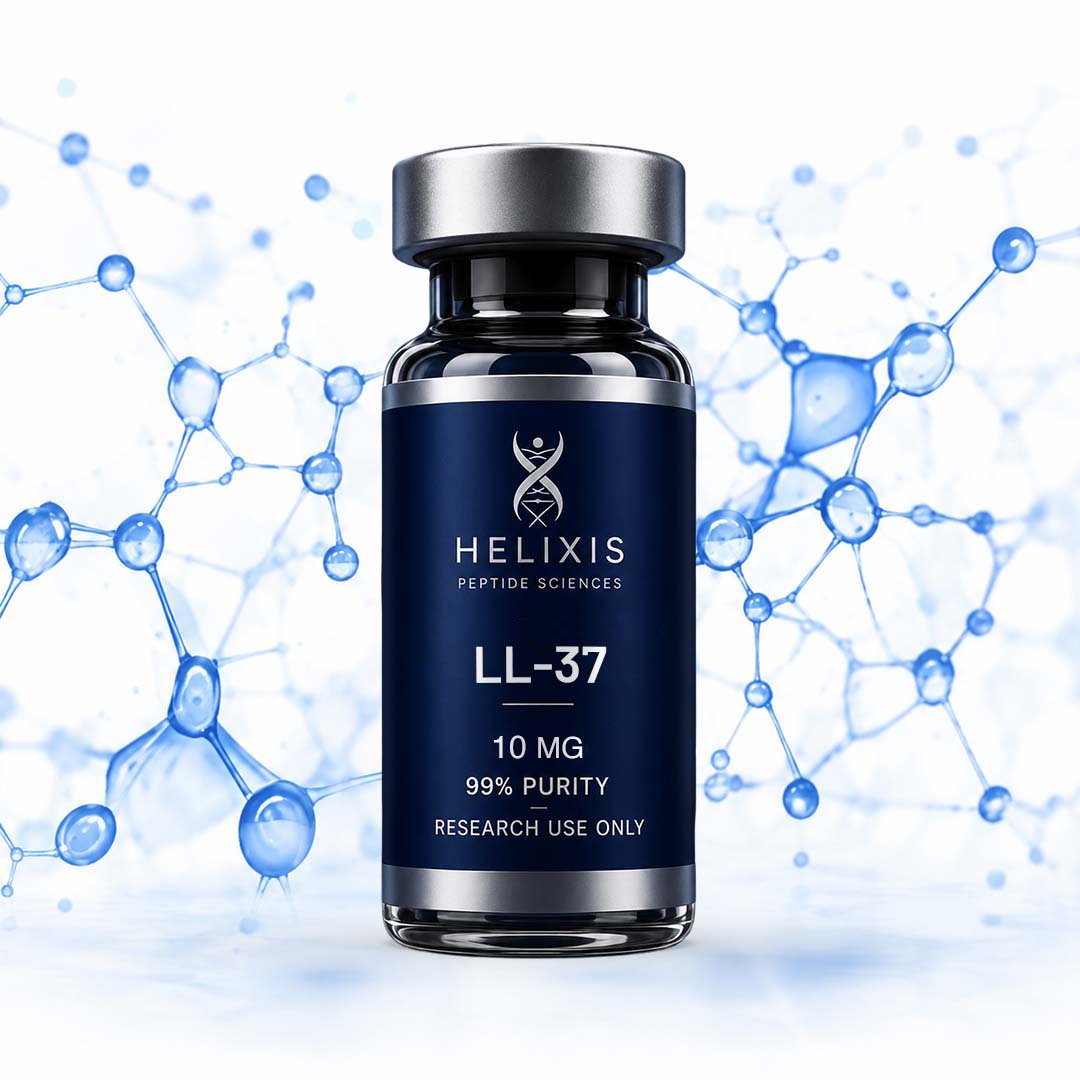
LL37
Reconstitution Steps
- Draw 0.5 mL bacteriostatic water with a sterile syringe.
- Inject slowly down the vial wall; avoid foaming.
- Gently swirl until dissolved (do not shake).
- Label and refrigerate at 2 to 8 °C, protected from light. At 10 mg/mL, 1 unit = 0.01 mL » 100 mcg on a U-100 insulin syringe.
How It Works
LL-37 exerts both direct and indirect antimicrobial effects. Its amphipathic, cationic a-helical structure (net +6 charge) allows it to preferentially bind and disrupt negatively charged microbial membranes. Beyond direct killing, LL-37 modulates host immunity: in murine sepsis models, it induced neutrophils to release microvesicles rich in antimicrobial proteins, lowering bacterial burden and improving survival. LL-37 can also bind bacterial lipopolysaccharide (LPS) and block its interaction with CD14/TLR4, reducing endotoxin-triggered TNF release and neutrophil apoptosis. These combined mechanisms help explain its potential in infection control and tissue-repair contexts.
Benefits & Side Effects
- In chronic venous leg ulcers (which often lack endogenous LL-37), topical treatment with synthetic LL-37
significantly accelerated healing rates compared to placebo.
- In diabetic foot ulcer trials, LL-37 cream improved granulation tissue formation and wound closure.
- Broad-spectrum antimicrobial action helps clear infections; in experimental sepsis models, LL-37
treatment reduced bacterial loads and mortality.
- Generally well tolerated; occasional mild injection-site reactions (redness, itch) may occur with subcutaneous administration.
References & Scientific Literature
- Evaluation of LL-37 in healing of hard-to-heal venous leg ulcers: multicentric RCT (Wound Repair and Regeneration).
- Little peptide, big effects: the role of LL-37 in inflammation and autoimmune disease (Journal of Immunology).
- Antimicrobial peptide LL-37 ameliorates a murine sepsis model via microvesicle release (Innate Immunity).
- Efficacy of LL-37 cream in enhancing healing of diabetic foot ulcer: RCT (Archives of Dermatological Research).