
Semax 11mg

Semax 11mg
Semax is a synthetic heptapeptide analog of ACTH(4-10) developed in Russia and studied primarily for cognitive enhancement and neuroprotection. While intranasal administration is most common in clinical literature, subcutaneous injection offers a convenie
|
Vial Size
|
Dose Range
|
Schedule
|
Primary Goal
|
|---|---|---|---|
| 10mg vial | 300 to 800 mcg daily with gradual titration; aligns with typical human nootropic dosing ranges. | Daily subcutaneous injections for 8 weeks (extend to 12 to 16 weeks with cycling if desired). | Support cognitive function, attention, and neuroprotective pathways studied in clinical literature. |
Reconstitution Summary
Storage Summary
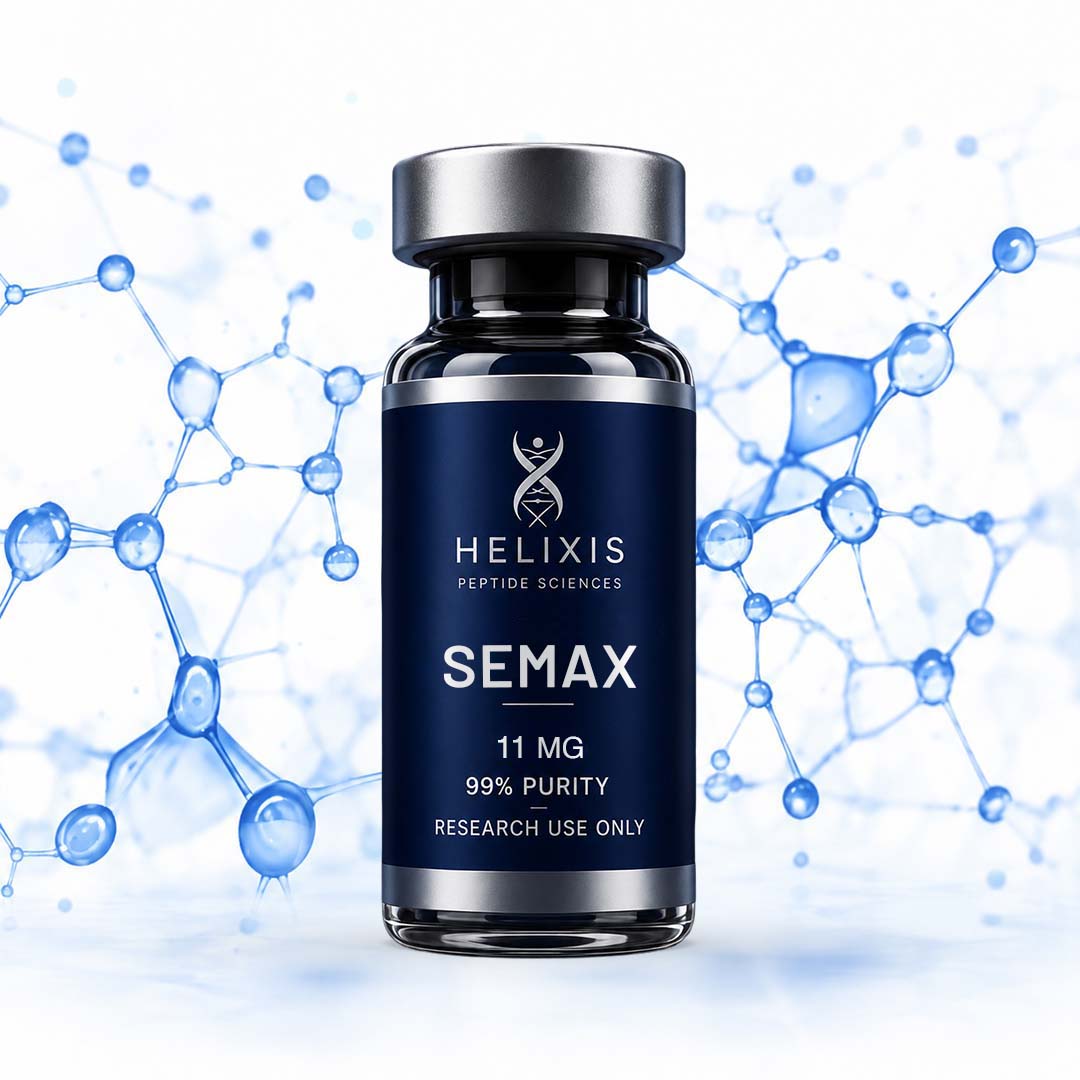
Semax 11mg
Reconstitution Steps
- Draw 1 mL bacteriostatic water with a sterile syringe.
- Inject slowly down the vial wall; avoid foaming.
- Gently swirl until dissolved (do not shake vigorously).
- Label and refrigerate at 2 to 8 °C, protected from light. At 10 mg/mL, 1 unit = 0.01 mL » 100 mcg on a U-100 insulin syringe.
How It Works
Semax is a synthetic analog of the ACTH(4-10) fragment with a C-terminal Pro-Gly-Pro tripeptide extension that enhances metabolic stability. Clinical and preclinical literature suggest it modulates brain-derived neurotrophic factor (BDNF) expression, enhances cholinergic and dopaminergic neurotransmission, and exhibits neuroprotective properties in models of cerebrovascular and cognitive impairment. Human studies in Russia have employed Semax for cognitive support in conditions ranging from mild cognitive impairment to acute stroke recovery, typically using intranasal administration. Subcutaneous delivery offers an alternative route with potentially more sustained systemic absorption.
Benefits & Side Effects
- May support attention, memory consolidation, and learning in clinical populations with cognitive deficits.
- Studied in neurological conditions including stroke, traumatic brain injury, and optic neuropathy with
favorable safety profiles in month-long human trials. - Generally well tolerated; intranasal administration may cause minor nasal irritation; subcutaneous
injection may produce mild injection-site reactions. - No significant elevations in cortisol or other adverse endocrine effects reported in clinical studies.
- Effects are dose-dependent; titration helps identify the minimum effective dose for individual response.
References & Scientific Literature
- Comparative study of Semax administration routes (intranasal vs. subcutaneous) in animal models (Neuroscience and Behavioral Physiology).
- Clinical trial of Semax in ischemic stroke patients (Journal of Neurology and Psychiatry, Russia).
- Vidal Drug Reference (Russia): Semax 0.1% intranasal drops, human dosing guidelines.
- Overview of Russian peptide drugs including Semax (Pharmaceutics, MDPI).