
TB500 10mg

TB500 10mg
TB-500 is a synthetic peptide fragment corresponding to the active region of thymosin beta-4 (Tb4), a naturally occurring 43 amino acid protein involved in tissue repair and regeneration. This educational protocol presents a once-daily subcutaneous approa
|
Vial Size
|
Dose Range
|
Schedule
|
Primary Goal
|
|---|---|---|---|
| 10mg vial | 500 to 1,000 mcg daily with gradual titration (~5 mg/week average). | Daily subcutaneous injections for 8 to 12 weeks (extend to 16 weeks if research goals require). | Support tissue repair, wound healing, and angiogenesis through the active thymosin beta-4 fragment mechanism. |
Reconstitution Summary
Storage Summary
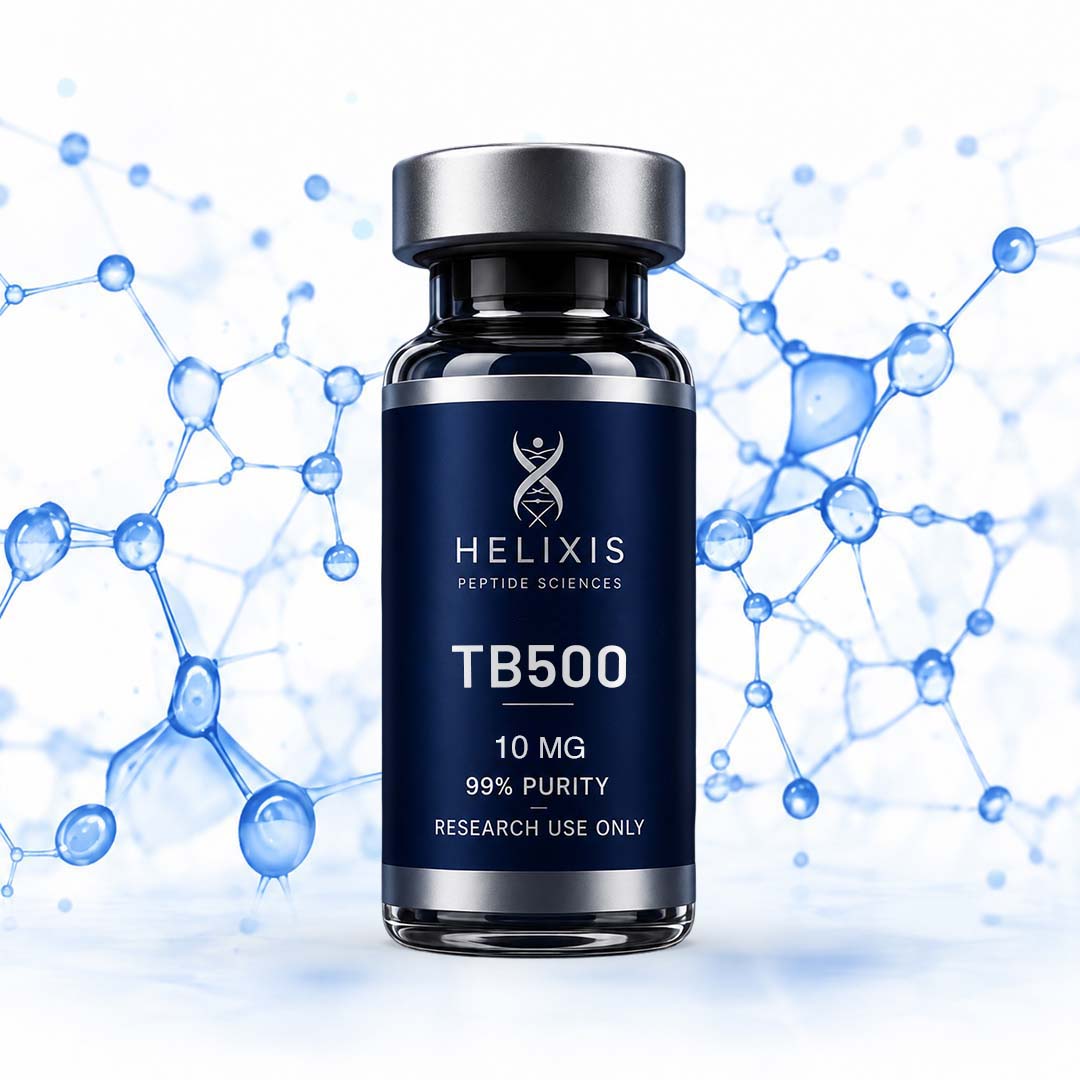
TB500 10mg
Reconstitution Steps
- Draw 1 mL bacteriostatic water with a sterile syringe.
- Inject slowly down the vial wall; avoid foaming.
- Gently swirl until dissolved (do not shake).
- Label with date and concentration; refrigerate at 2 to 8 °C, protected from light. At 10 mg/mL, 1 unit = 0.01 mL » 100 mcg on a U-100 insulin syringe.
How It Works
TB-500 represents the N-terminal active fragment of thymosin beta-4, specifically the heptapeptide sequence Ac-LKKTETQ. This region is responsible for the actin-binding and cell-migration properties of the full thymosin molecule. Preclinical studies demonstrate that TB-500 promotes angiogenesis, accelerates wound healing, and supports tissue regeneration by upregulating cell motility and blood vessel formation. Research in animal models shows enhanced collagen deposition and reduced healing time in injury sites treated with thymosin fragments. Recent metabolic studies suggest TB-500 may act as a prodrug, cleaving to an active pentapeptide metabolite that drives biological activity.
Benefits & Side Effects
- Supports accelerated wound healing and tissue repair through enhanced angiogenesis and cell
migration. - May reduce inflammation and fibrosis indirectly via thymosin pathways observed in animal models.
Generally well tolerated in veterinary studies; occasional mild injection-site reactions (redness,
tenderness) reported. - Human safety data is limited; no large-scale clinical trials have been completed for TB-500 specifically.
References & Scientific Literature
- Biological activities of thymosin b4 defined by active peptide sequences (FASEB Journal).
- Thymosin beta4 accelerates wound healing (Journal of Investigative Dermatology).
- Active site mapping of thymosin b4 fragments for angiogenesis and cell migration (FASEB Journal).
- Quantification of TB-500 metabolites and wound healing activity screening (Journal of Chromatography B).