
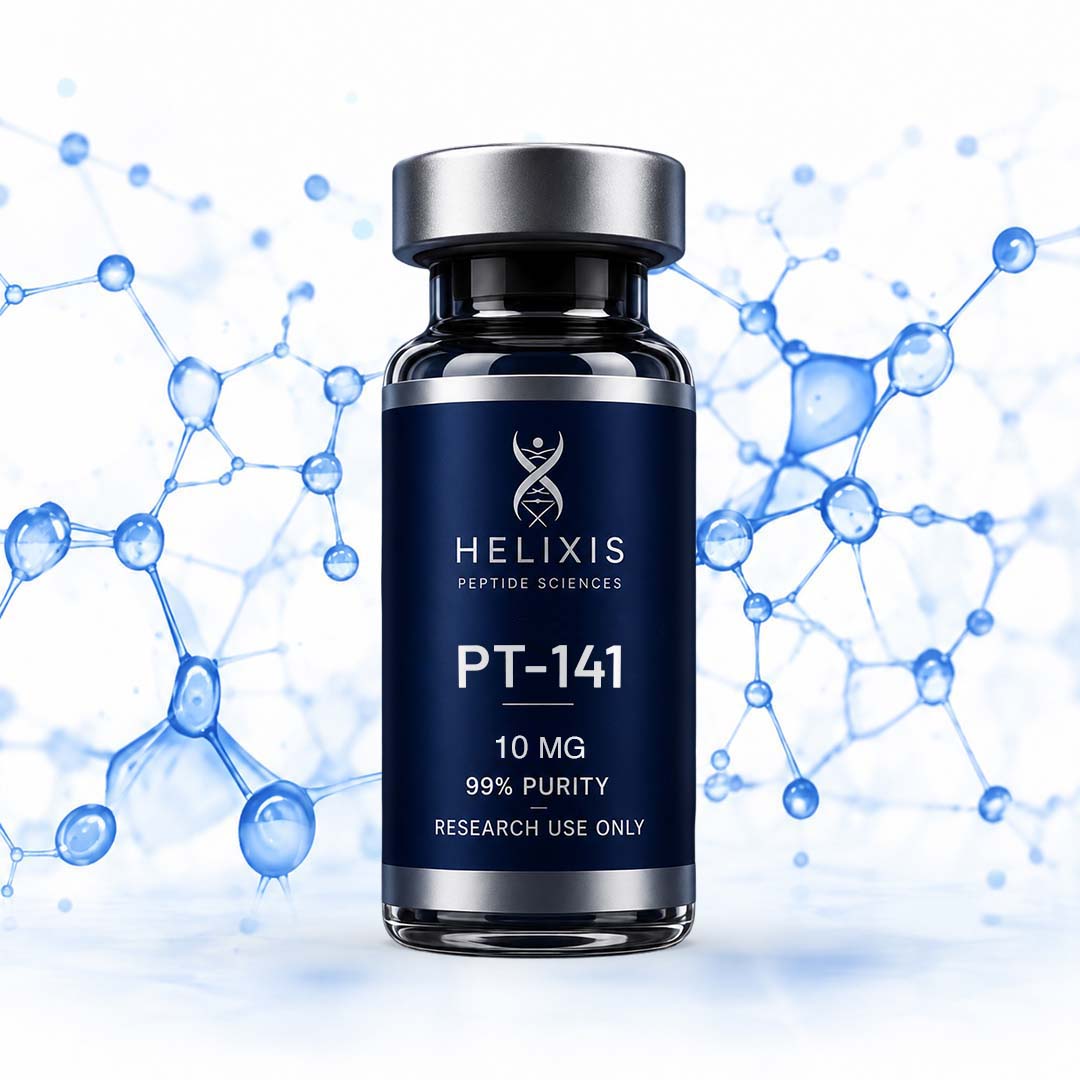
PT 141 10mg

PT 141 10mg
PT-141 (bremelanotide) is a synthetic cyclic heptapeptide and non-selective melanocortin receptor agonist (MC3R/MC4R) derived as an active metabolite of Melanotan II. FDA-approved in 2019 for hypoactive sexual desire disorder (HSDD) in premenopausal women
|
Vial Size
|
Dose Range
|
Schedule
|
Primary Goal
|
|---|---|---|---|
| 10mg vial | 500 to 1,500 mcg daily with gradual titration. | Daily subcutaneous injections for 8 to 12 weeks (extend to 16 weeks if desired). | Support sexual desire and arousal through central melanocortin receptor activation. |
Reconstitution Summary
Storage Summary
PT 141 10mg
Reconstitution Steps
- Draw 1 mL bacteriostatic water with a sterile syringe.
- Inject slowly down the vial wall; avoid foaming.
- Gently swirl until dissolved (do not shake).
- Label and refrigerate at 2 to 8 °C, protected from light. At 10 mg/mL, 1 unit = 0.01 mL » 100 mcg on a U-100 insulin syringe.
How It Works
Bremelanotide is a synthetic analog of a-melanocyte-stimulating hormone that acts as a non-selective melanocortin receptor agonist, predominantly targeting MC3R and MC4R. In the central nervous system, MC4R activation enhances dopamine release in key brain reward and arousal regions including the nucleus accumbens and medial preoptic area, which increases sexual motivation and desire. Unlike PDE5 inhibitors, bremelanotide does not directly affect the nitric oxide pathway; in men, its erectogenic effect is secondary to this central mechanism stimulating nitric oxide production in penile tissue. Peripheral MC1R agonism accounts for side effects such as transient blood pressure elevation and skin hyperpigmentation (tanning)
Benefits & Side Effects
- Clinical trials in premenopausal women with HSDD demonstrated significant improvements in sexual
desire scores (FSFI-Desire) and reduced distress (FSDS-DAO) versus placebo. - Early studies also suggest potential benefit in men, with intranasal PT-141 improving erectile responses
and increasing arousal measures in women. - Adverse effects: usually mild and transient: most commonly nausea (~40%), flushing, headache, and injection-site reactions.
- Transient blood pressure increases: have been reported; not recommended for individuals with
uncontrolled hypertension or cardiovascular disease. - Skin darkening (hyperpigmentation): may occur with repeated use due to peripheral MC1R activation
and is generally reversible.
References & Scientific Literature
- Vyleesi (bremelanotide) prescribing information; approved 2019 for HSDD (FDA).
- Bremelanotide for treatment of female hypoactive sexual desire: mechanism, trials, and safety review (PMC, 2022).
- Bremelanotide (subcutaneous route): side effects, dosage, and precautions (Mayo Clinic).
- Kingsberg SA et al. Bremelanotide for HSDD: two randomized phase 3 trials (RECONNECT, Obstet Gynecol, 2019).