
Retatruide

Retatruide
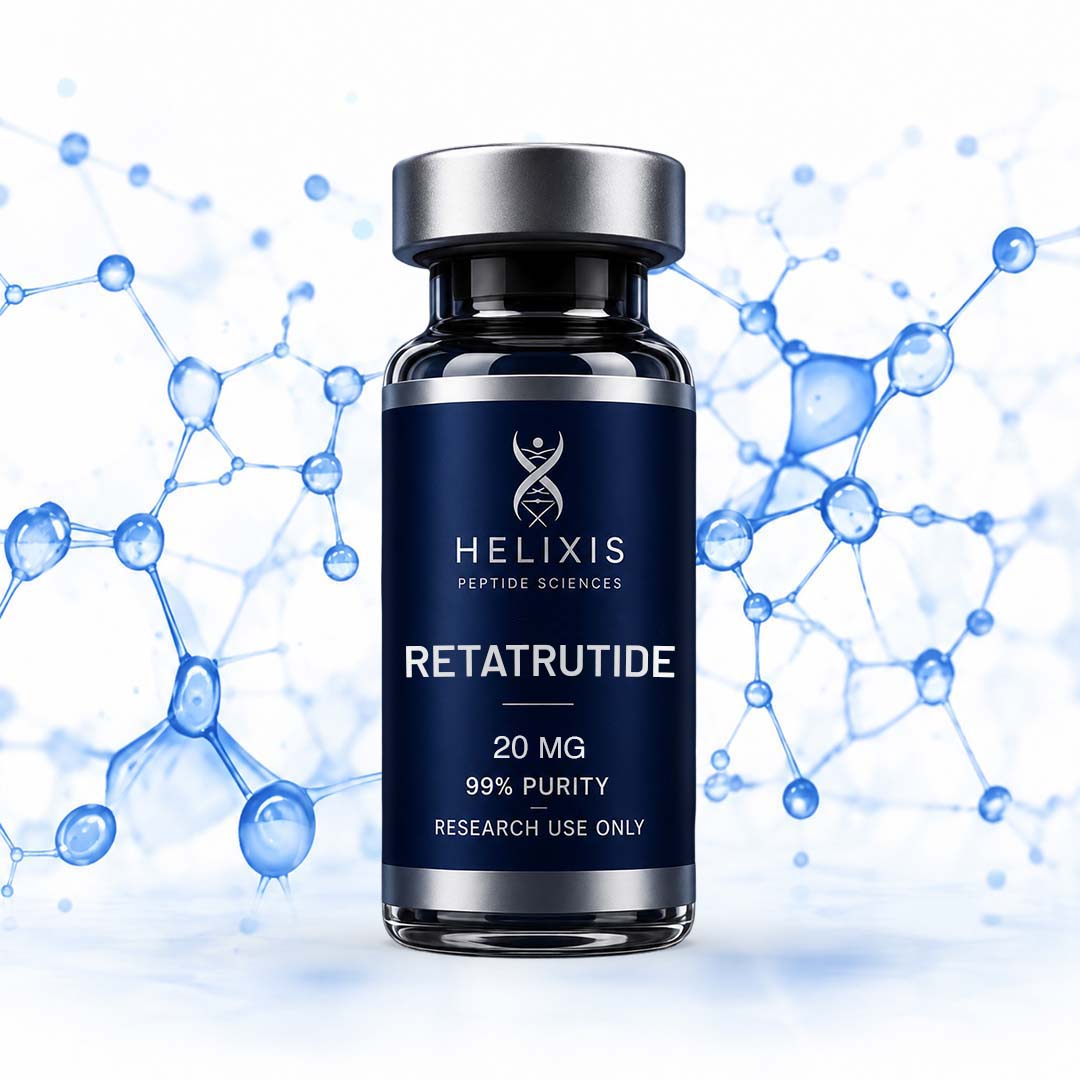
Retatrutide (LY3437943) is a novel triple-agonist peptide targeting GLP-1, GIP, and glucagon receptors simultaneously, engineered with a fatty-acid moiety for an approximately 6 day half-life and once-weekly dosing.
|
Vial Size
|
Dose Range
|
Schedule
|
Primary Goal
|
|---|---|---|---|
| 10mg vial | 2 to 12 mg weekly with gradual 4-week titration steps. | Weekly subcutaneous injections for 12 to 48 weeks (clinical trials ranged 36 to 48 weeks). | Support significant weight reduction and metabolic improvements through triple-receptor activation. |
Reconstitution Summary
Storage Summary
Retatruide
Reconstitution Steps
- Draw 1 mL bacteriostatic water with a sterile syringe.
- Inject slowly down the vial wall; avoid foaming.
- Gently swirl until dissolved (do not shake).
- Label with date and refrigerate at 2 to 8 °C, protected from light.
- Use within 4 weeks of reconstitution. At 10 mg/mL, 1 unit = 0.01 mL » 100 mcg on a U-100 insulin syringe.
How It Works
Retatrutide’s unique mechanism stems from its triple-agonist design. By activating GLP-1 and GIP receptors, it enhances insulin secretion (when glucose is present) and suppresses appetite, similar to existing incretin therapies. Additionally, Retatrutide’s glucagon receptor agonism raises metabolic rate and promotes energy expenditure, further amplifying fat burning and weight loss beyond GLP-1/GIP effects alone. The peptide is engineered with a fatty-acid moiety to extend its circulation time (half-life ~6 days), allowing for once-weekly dosing. The combined hormonal activation leads to reduced calorie intake, increased satiety, and enhanced lipid oxidation, yielding potent weight loss and glycemic control. Preclinical studies confirmed that adding glucagon activity helps counteract the body’s adaptive slowing of metabolism during weight loss.
Benefits & Side Effects
- Exceptional weight loss: Patients with obesity (without diabetes) lost an average of 22 to 24% of body weight at 48 weeks on 8 to 12 mg doses.
- Glycemic control: In type 2 diabetes patients, HbA1c dropped by 1.3 to 2.0% (from ~8.0% to ~6.0%) with 4 to 12 mg doses; ~82% reached HbA1c at or below 6.5%.
- Cardiometabolic improvements: Reductions in blood pressure, LDL cholesterol, waist circumference, and liver fat content (over 80% resolution of hepatic steatosis on high doses).
- Universal response: 100% of participants on 8 to 12 mg achieved at least 5% weight reduction.
GI side effects: Most common adverse effects were mild to moderate nausea, vomiting, and diarrhea,
occurring primarily during dose escalation. - Side effects were dose-dependent and transient; gradual titration (4-week intervals) significantly reduced
GI discomfort compared to rapid escalation. - No severe hypoglycemia or serious treatment-related adverse events reported in trials.
Safety profile comparable to GLP-1 agonists when properly titrated.
References & Scientific Literature
- Rosenstock J, et al. Retatrutide for type 2 diabetes: Phase 2 trial results (The Lancet, 2023).
- Jastreboff AM, et al. Triple-hormone-receptor agonist Retatrutide for obesity: Phase 2 trial (NEJM, 2023).
- Coskun T, et al. LY3437943 (Retatrutide): discovery to clinical proof of concept (Cell Metabolism, 2022).
- Hamza M, et al. Triple agonism based therapies for obesity (Current Obesity Reports, 2025).