
BPC 10mg + TB 10 mg

BPC 10mg + TB 10 mg
Once-daily subcutaneous protocol for combined tissue-repair peptide research (Wolverine Stack). BPC-157 (Body Protection Compound-157) is a 15 amino acid peptide fragment derived from human gastric juice, studied for its cytoprotective and tissue-repair p
|
Vial Size
|
Dose Range
|
Schedule
|
Primary Goal
|
|---|---|---|---|
| 10 mg + 10 mg | 500 to 1,500 mcg total blend daily (providing ~250 to 750 mcg of each peptide). | Daily subcutaneous injections for 4 to 8 weeks; some protocols include 3-month-on / 6-week-off cycling. | Support tissue repair, wound healing, and musculoskeletal recovery in research contexts. |
Reconstitution Summary
Storage Summary
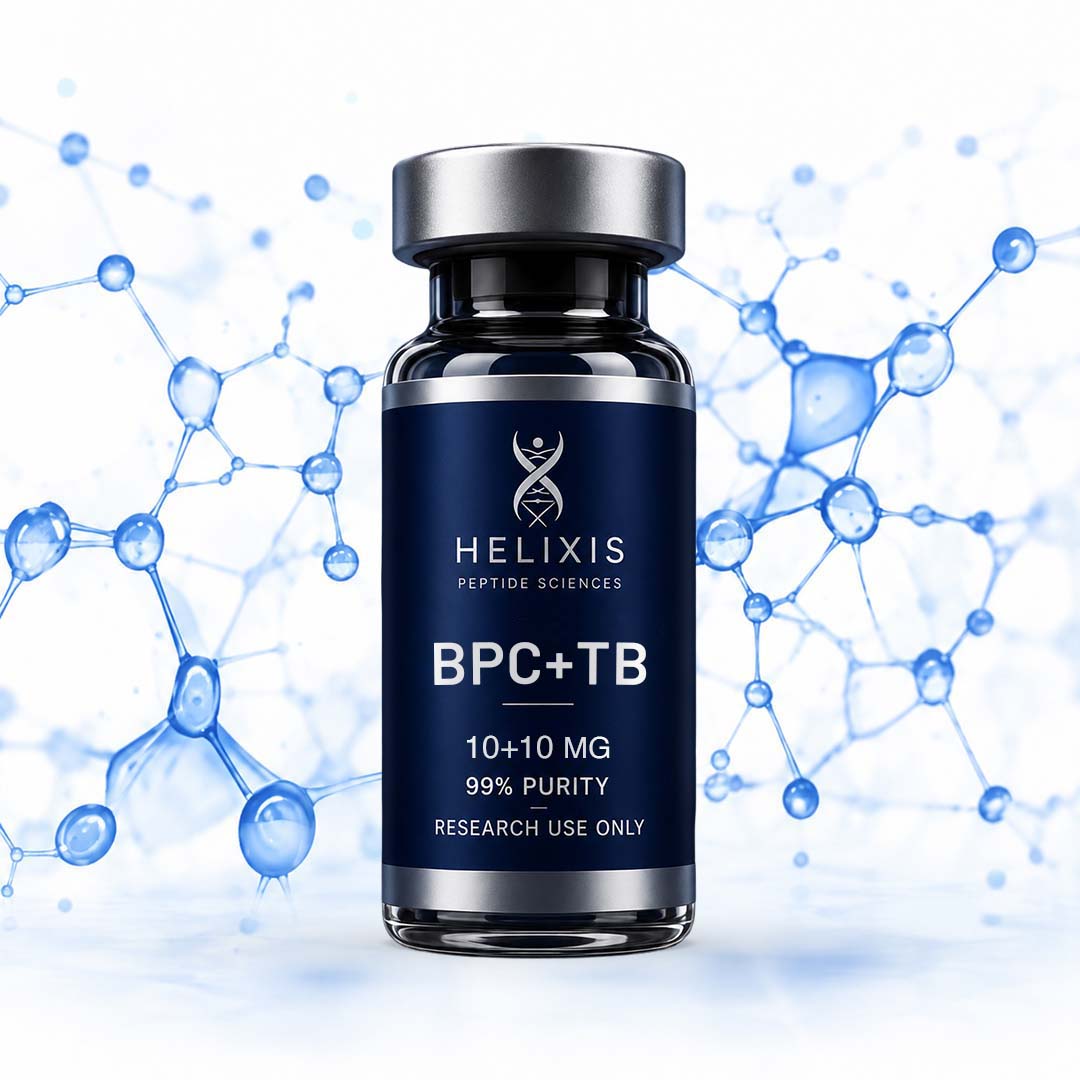
BPC 10mg + TB 10 mg
Reconstitution Steps
- Draw 2 mL bacteriostatic water with a sterile syringe.
- Inject slowly down the vial wall; avoid foaming or direct stream onto the powder.
- Gently swirl or roll until fully dissolved (do not shake).
- Label with reconstitution date and refrigerate at 2 to 8 °C, protected from light. At 10 mg/mL total, 1 unit = 0.01 mL » 66.7 mcg total (~33.3 mcg of each peptide) on a U-100 insulin syringe.
How It Works
BPC-157 is a synthetic pentadecapeptide (15 amino acids) originally isolated from human gastric juice. Preclinical research indicates it exerts cytoprotective effects across multiple organ systems, promotes angiogenesis, modulates nitric oxide pathways, and interacts with growth-factor systems involved in tissue repair. TB-500 (Thymosin b4) is a naturally occurring peptide that regulates actin polymerization, promotes cell migration, reduces inflammation, and supports wound healing and tissue regeneration. The combination is hypothesized to provide complementary mechanisms for accelerated musculoskeletal and soft-tissue recovery
Benefits & Side Effects
- Tissue Repair: Both peptides demonstrate wound-healing, tendon-repair, and anti-inflammatory
properties in animal models. - Gastrointestinal Support: BPC-157 shows gastroprotective and ulcer-healing effects in preclinical
studies. - Safety Profile: Preclinical data indicate a wide safety margin for BPC-157 (no lethal dose up to ~20
mg/kg); TB-500 human tolerability studies report mild adverse events at doses up to 1,260 mg. - Possible Side Effects: Occasional mild injection-site reactions (redness, itching); rare reports of
transient dizziness or nausea; long-term human safety data remain limited.
References & Scientific Literature
- Stable gastric pentadecapeptide BPC 157: pleiotropic beneficial activity and neurotransmitter interactions (Biomedicines, 2022).
- BPC 157 and standard angiogenic growth factors: GI tract healing and angiogenesis (Current Pharmaceutical Design, 2018).
- Thymosin b4: roles in development, repair, and regeneration (Annals NY Academy of Sciences, 2007).
- Thymosin b4: a multi-functional regenerative peptide (Expert Opinion on Biological Therapy, 2018).