
5-Amino-1MQ 50mg

5-Amino-1MQ 50mg
5-Amino-1MQ dosage protocols center on this selective, cell-permeable NNMT (Nicotinamide N-methyltransferase) inhibitor studied for its potential to support fat metabolism, preserve lean muscle mass, and elevate intracellular NAD+ levels.
|
Vial Size
|
Dose Range
|
Schedule
|
Primary Goal
|
|---|---|---|---|
| 50mg vial | 2.5 to 5 mg once or twice daily. | Daily subcutaneous injections; each 50 mg vial provides 10 to 20 days of research material. | Support metabolic efficiency through NNMT inhibition, potentially enhancing fat oxidation and NAD+ levels. |
Reconstitution Summary
Storage Summary
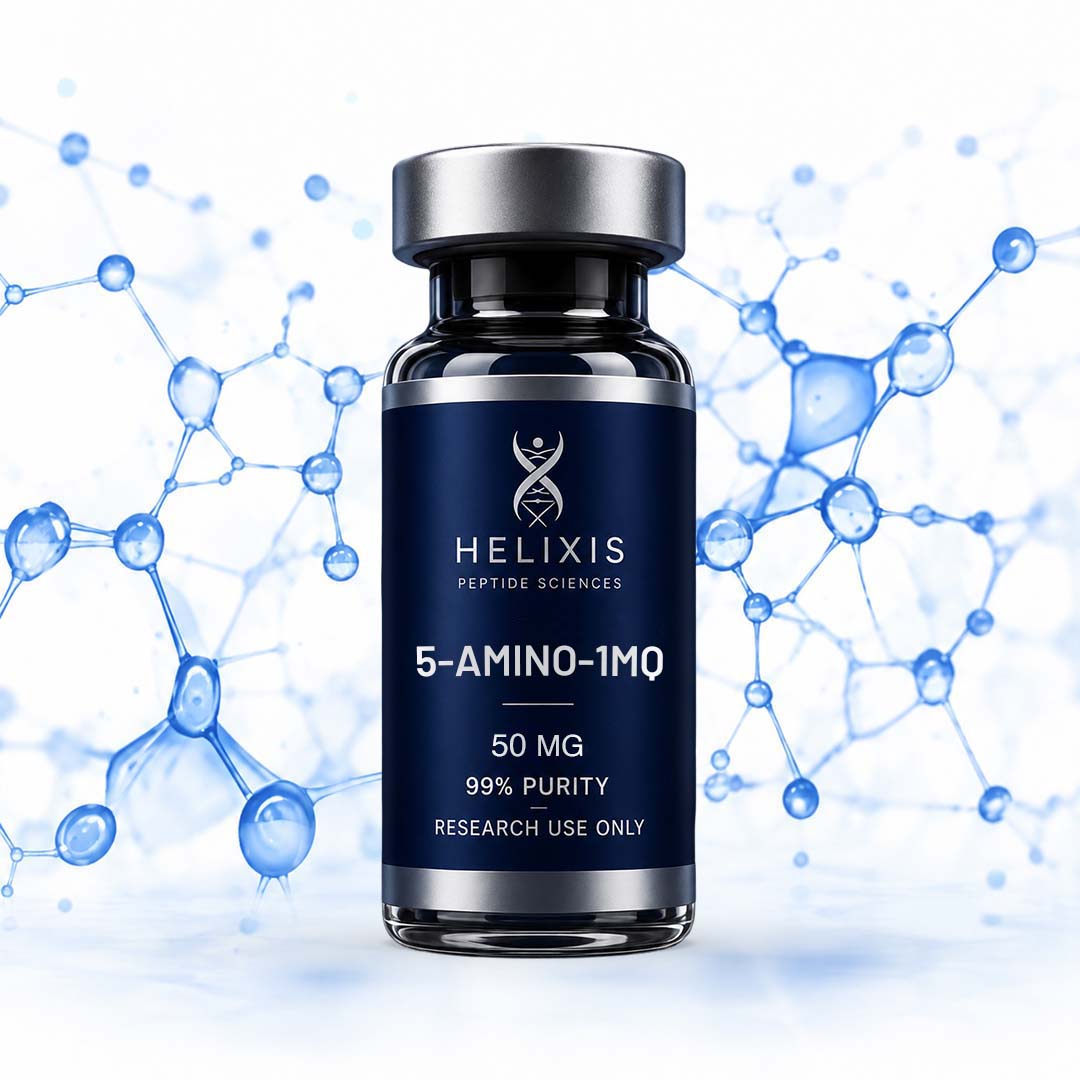
5-Amino-1MQ 50mg
Reconstitution Steps
- Remove the vial from freezer storage and allow to equilibrate at room temperature for 15 to 20 minutes.
- Draw 2.5 mL bacteriostatic water with a sterile syringe.
- Inject slowly down the vial wall; avoid foaming.
- Gently swirl until dissolved (solution should be clear; do not shake).
- Label and refrigerate at 2 to 8 °C, protected from light; use within 2 to 4 weeks. At 20 mg/mL, 1 unit = 0.01 mL = 0.2 mg (200 mcg) on a U-100 insulin syringe.
How It Works
5-Amino-1MQ (5-amino-1-methylquinolinium) is a synthetic small molecule that selectively inhibits Nicotinamide N-methyltransferase (NNMT). NNMT is an enzyme that methylates nicotinamide (vitamin B3) using S-adenosylmethionine (SAM) as a methyl donor. In states of obesity and metabolic dysfunction, NNMT is often overexpressed in adipose tissue, depleting nicotinamide and reducing NAD+ availability. By inhibiting NNMT, 5-Amino-1MQ may spare nicotinamide for NAD+ synthesis, thereby activating SIRT1 (Sirtuin 1) pathways associated with mitochondrial biogenesis and fat oxidation. Preclinical studies indicate that NNMT knockdown or inhibition can protect against diet-induced weight gain and improve metabolic parameters without reducing food intake.
Benefits & Side Effects
- May support reductions in fat mass while preserving lean muscle in animal models.
- Associated with elevated NAD+ levels and SIRT1 activation in preclinical studies.
- Enhanced grip strength observed in aged mice when combined with exercise.
- Generally well tolerated; occasional reports of mild headache, transient jitteriness, or injection-site
reactions. - Long-term human safety data not established; this compound remains investigational.
References & Scientific Literature
- Nicotinamide N-methyltransferase knockdown protects against diet-induced obesity (Nature Medicine, 2014).
- NNMT inhibition mitigates obesity-related metabolic dysfunctions (PMC, 2024).
- NNMT: a novel therapeutic target for metabolic syndrome (Frontiers in Pharmacology, 2024).
- LC-MS/MS assay for 5-amino-1-methylquinolinium: pharmacokinetic and oral bioavailability study (PubMed, 2021).