
ARA-290

ARA-290
Ara-290 (cibinetide) is an 11 amino acid non-erythropoietic peptide derived from erythropoietin's helix-B domain. It selectively activates the innate repair receptor (IRR), an EPOR/CD131 heterodimer, to promote anti-inflammatory and tissue-protective.
|
Vial Size
|
Dose Range
|
Schedule
|
Primary Goal
|
|---|---|---|---|
| 10mg vial | 2 to 4 mg daily; 4 mg is the established target dose. | Daily subcutaneous injections for 4 to 8 weeks (clinical trials used 28-day protocols; extension to 8 to 16 weeks based on individual response). | Support tissue protection, anti-inflammatory signaling, and neuropathic symptom management via IRR activation. |
Reconstitution Summary
Storage Summary
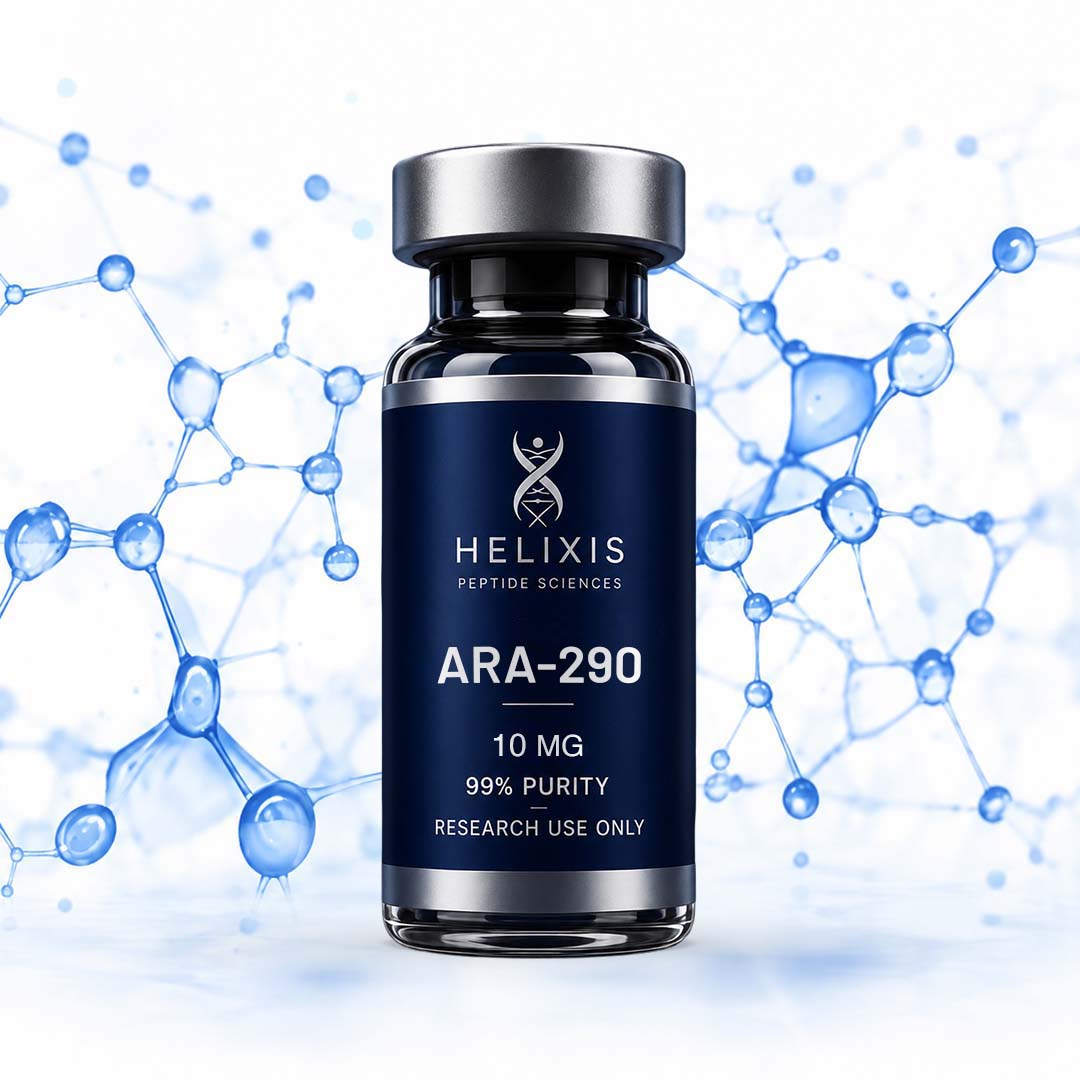
ARA-290
Reconstitution Steps
- Draw 1.6 mL bacteriostatic water with a sterile syringe.
- Inject slowly down the vial wall; avoid foaming.
- Label with reconstitution date and refrigerate at 2 to 8 °C, protected from light. At 10 mg/mL, 1 unit =
- 0.01 mL = 80 mcg on a U-100 insulin syringe.
How It Works
Ara-290 (cibinetide) binds to the innate repair receptor (IRR), a heterodimer of EPOR and CD131 (bc subunit), which is distinct from the classical erythropoietin receptor. This selective binding triggers anti-apoptotic and anti-inflammatory signaling cascades that protect tissues and promote repair without stimulating erythropoiesis. Preclinical research demonstrates that Ara-290 can reprogram a pro-inflammatory, tissue-damaging environment into one favoring healing and regeneration. Additionally, analgesic effects have been observed through immunomodulation and direct inhibition of TRPV1 ion channels activated by capsaicin.
Benefits & Side Effects
- Neuroprotection: Clinical trials in diabetic neuropathy showed improvements in HbA1c, lipid profiles,
and neuropathic pain scores with 4 mg daily dosing. - Nerve regeneration: In sarcoidosis-associated small-fiber neuropathy, treatment led to significant
increases in corneal nerve fiber density and improved symptoms compared to placebo. - Tissue protection: Anti-inflammatory and anti-apoptotic effects observed across multiple organ systems in preclinical models.
- No erythropoietic effects: Unlike full EPO, Ara-290 does not stimulate red blood cell production,
avoiding related side effects. - Tolerability: Well tolerated in clinical studies; occasional mild injection-site reactions (redness, transient discomfort) may occur with subcutaneous administration.
References & Scientific Literature
- Brines M et al. ARA 290 improves metabolic control and neuropathic symptoms in type 2 diabetes (Molecular Medicine, 2014).
- Dahan A et al. ARA 290 improves symptoms in sarcoidosis-associated small nerve fiber loss (Molecular Medicine, 2013).
- Brines & Cerami. Discovery and development of the innate repair receptor and its non-erythropoietic ligands (Molecular Medicine, 2008).
- Zhang W et al. ARA 290 relieves pathophysiological pain by targeting TRPV1 channel (Peptides Journal, 2016). Ara-290 (16 mg vial) Once-daily subcutaneous protocol for innate repair receptor activation research. Ara-290 (cibinetide) is an 11 amino acid non-erythropoietic peptide derived from erythropoietin’s helix-B domain. It selectively activates the innate repair receptor (IRR), an EPOR/CD131 heterodimer, to promote anti-inflammatory and tissue-protective effects without stimulating red blood cell production. Clinical trials have demonstrated benefits for diabetic neuropathy and sarcoidosis-related small-fiber neuropathy. Protocol Overview Concise summary of the regimen. Goal: Support tissue protection, anti-inflammatory signaling, and neuropathic symptom management via IRR activation. Schedule: Daily subcutaneous injections for 4 to 8 weeks (clinical trials used 28-day protocols; extension to 8 to 16 weeks based on individual response). Dose Range: 2 to 4 mg daily; 4 mg is the established target dose. Reconstitution: 1.6 mL per 16 mg vial (10 mg/mL). Storage: Lyophilized refrigerated or frozen; reconstituted refrigerated up to 28 days. Dosing & Reconstitution Guide Standard / gradual approach (1.6 mL = 10 mg/mL). WEEK DAILY DOSE UNITS PER INJECTION Week 1 2 mg (2,000 mcg) 20 units (0.20 mL) Weeks 2 to 8 (or up to 16) 4 mg (4,000 mcg) 40 units (0.40 mL) Frequency: Inject once daily subcutaneously. Clinical studies used 4 mg/day as the target therapeutic dose, with no additional benefit observed at 8 mg. Starting at 2 mg for the first week allows assessment of individual tolerance before reaching the maintenance dose. Reconstitution Steps
Get Ara-290 at ION Peptide