
Glow

Glow
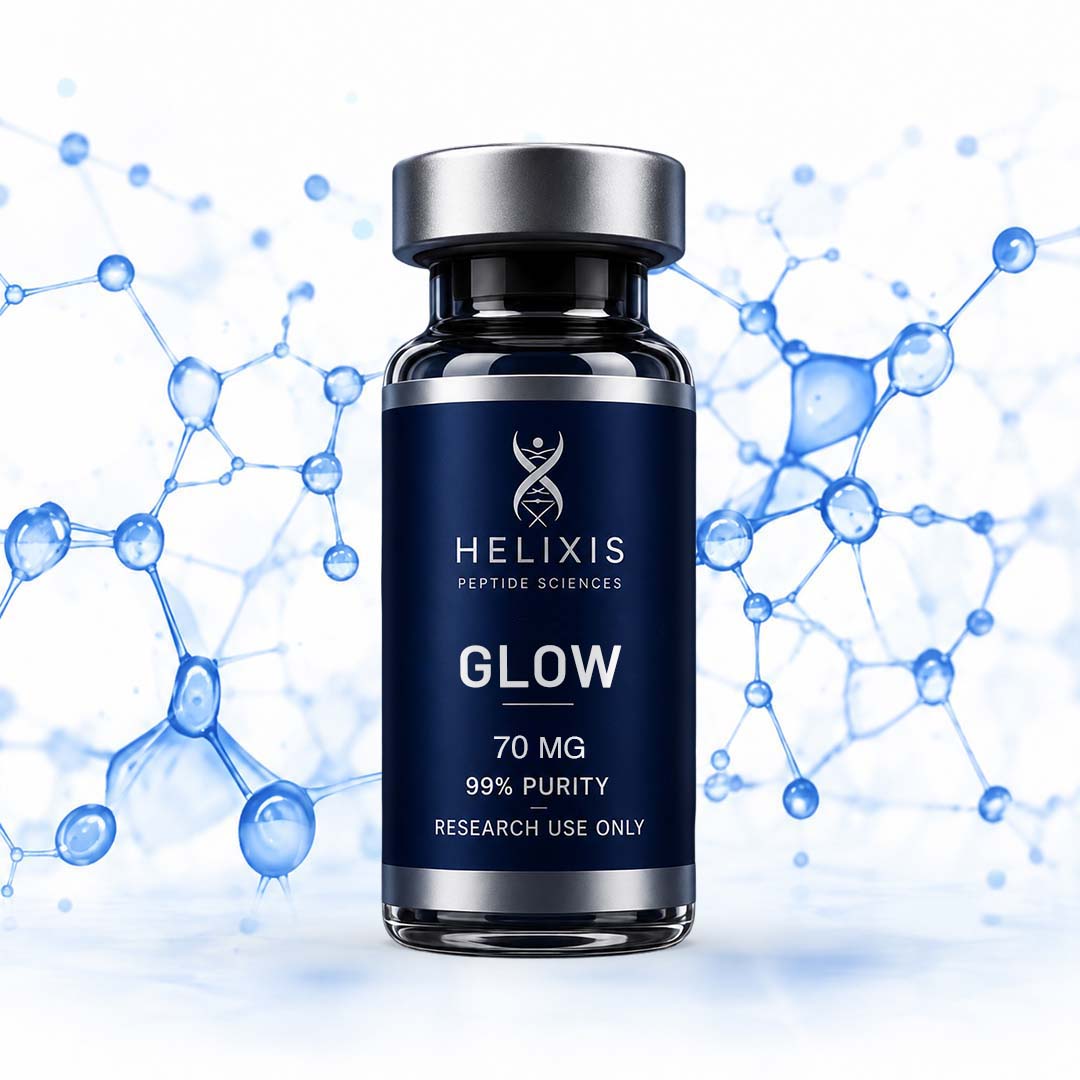
Once-daily subcutaneous protocol for combined regenerative peptide research. The GLOW blend combines GHK-Cu (collagen synthesis, antioxidant, anti-inflammatory), BPC-157 (tissue repair, microcirculation, anti-inflammatory), and TB-500 (cell migration, an
|
Vial Size
|
Dose Range
|
Schedule
|
Primary Goal
|
|---|---|---|---|
| GHK-Cu 50 mg + BPC-157 10 mg + TB-500 10 mg | Daily subcutaneous injections for 4 weeks, followed by a 2 to 4 week rest period. Dose: 2,330 mcg (2.33 mg) total blend daily, providing approximately 1.7 mg GHK-Cu, 0.33 mg TB-500, and 0.33 mg BPC-157 per injection. | Support comprehensive tissue healing through synergistic peptide mechanisms: collagen synthesis (GHK-Cu), cell migration and angiogenesis (TB-500), and localized repair with anti-inflammatory effects (BPC-157). |
Reconstitution Summary
Storage Summary
Glow
Reconstitution Steps
- Draw 3 mL bacteriostatic water with a sterile syringe.
- Inject slowly down the vial wall to minimize foaming.
- Gently swirl or roll the vial until fully dissolved (do not shake vigorously).
- Label with reconstitution date and refrigerate at 2 to 8 °C, protected from light.
- Use within 4 weeks for optimal potency and safety. At 23.33 mg/mL, 1 unit = 0.01 mL » 233.33 mcg on a U-100 insulin syringe.
How It Works
The three peptides in GLOW operate via distinct but complementary biological pathways. GHK-Cu acts as a genomic modulator that can upregulate genes related to tissue growth and downregulate those linked to inflammation and tissue breakdown. It stimulates collagen and glycosaminoglycan synthesis in fibroblasts, promotes angiogenesis, and exhibits antioxidant and anti-inflammatory properties. TB-500 (Thymosin b4) primarily facilitates cell migration and cytoskeletal remodeling by binding to actin and promoting the mobilization of cells to injury sites, accelerating angiogenesis and recruiting stem and progenitor cells. BPC-157 triggers a multi-factorial healing response: it enhances growth factor signaling (VEGF, PDGF), upregulates nitric oxide pathways for improved microcirculation, counteracts inflammatory mediators, and promotes the migration and survival of repair cells. By combining these mechanisms, GLOW supports collagen synthesis, cell migration, angiogenesis, and inflammation control in a single protocol.
Benefits & Side Effects
- Accelerated wound healing: Thymosin b4 improved closure rate of chronic skin wounds in clinical trials and animal models; BPC-157 has shown enhanced healing in tendon, muscle, bone, and gut injuries; GHK-Cu aids wound contraction and epithelialization.
- Anti-inflammatory and pain reduction: All three components mitigate inflammation at injury sites
through complementary pathways. - Improved tissue quality and reduced fibrosis: TB-500 minimizes fibrous scar tissue; BPC-157
supports organized collagen deposition; GHK-Cu boosts proper collagen and extracellular matrix production. - Multi-tissue regeneration: Applicable to orthopedic injuries, dermatologic uses, and potentially
gastrointestinal repair. - Tolerability: Generally well tolerated; occasional mild injection-site reactions (redness, itching) may
occur. - Note: large-scale human clinical trials are still needed to confirm efficacy and safety for specific
indications.
References & Scientific Literature
- Pickart L. Regenerative and Protective Actions of the GHK-Cu Peptide in Light of New Gene Data (Int J Mol Sci, 2018).
- Thymosin b4 Promotes Dermal Healing (Vitamins & Hormones, 2016).
- Thymosin b4: A Multi-Functional Regenerative Peptide (Expert Opinion on Biological Therapy, 2012).
- Emerging Use of BPC-157 in Orthopaedic Sports Medicine: A Systematic Review (HSS Journal, 2025).