
Ovagen 20mg

Ovagen 20mg
Ovagen is a synthetic ultrashort tripeptide (Glu-Asp-Leu, EDL) studied as a bioregulator of gastrointestinal and liver tissues. In vitro studies demonstrate that EDL increases cell proliferation and modulates aging-related gene markers (p16, p21, p53, SIR
|
Vial Size
|
Dose Range
|
Schedule
|
Primary Goal
|
|---|---|---|---|
| 20mg vial | 10 to 150 mcg daily with slow escalation. | Daily subcutaneous injections for 16 weeks with gradual titration. | Support gastrointestinal and hepatic tissue bioregulation research. |
Reconstitution Summary
Storage Summary
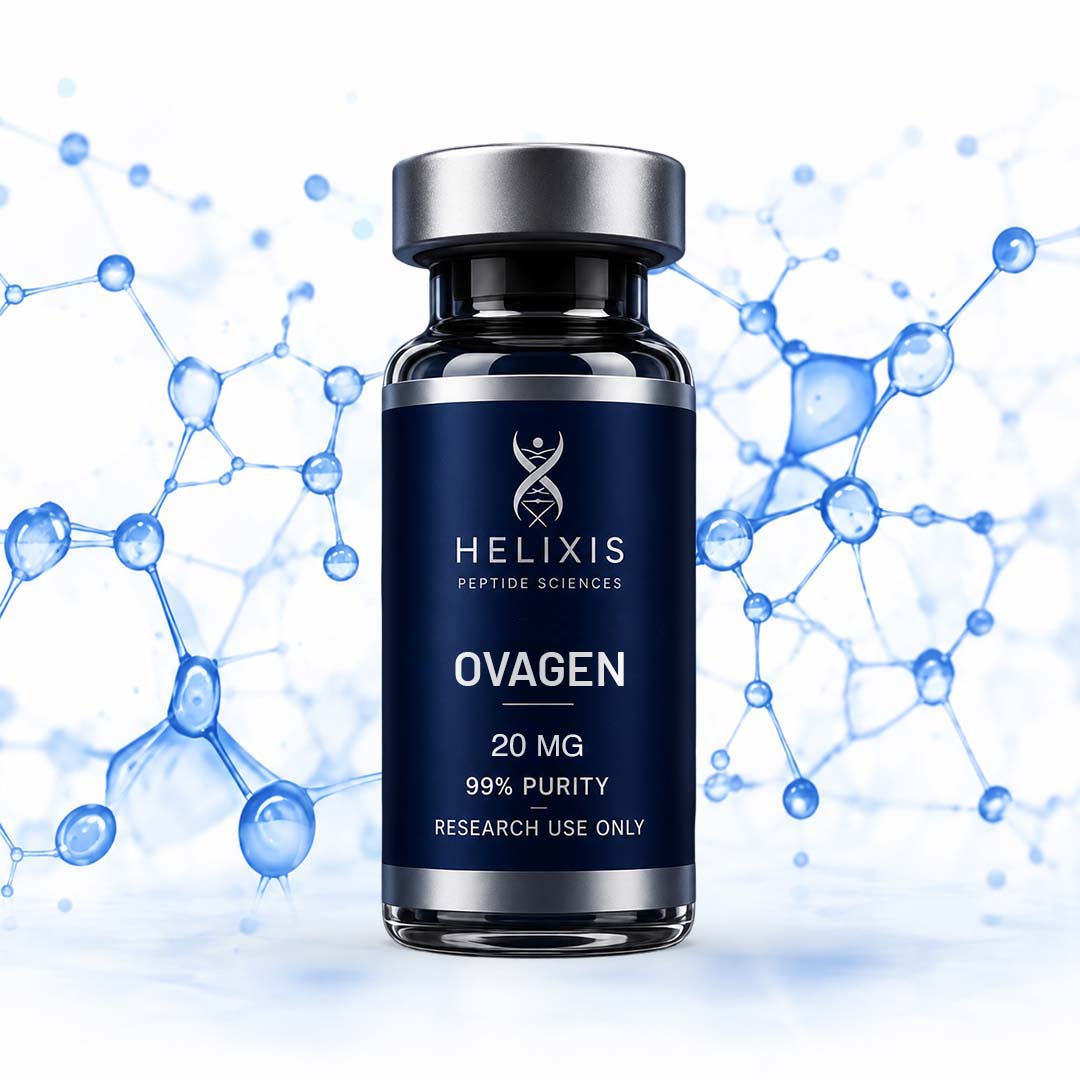
Ovagen 20mg
Reconstitution Steps
- Draw 2 mL bacteriostatic water with a sterile syringe.
- Inject slowly down the vial wall; avoid foaming.
- Gently swirl until dissolved (do not shake).
- Label and refrigerate at 2 to 8 °C, protected from light. At 10 mg/mL, 1 unit = 0.01 mL = 100 mcg on a U-100 insulin syringe.
How It Works
Ovagen (EDL) is an ultrashort peptide believed to enter cells and bind DNA, thereby modulating gene expression and protein synthesis. In vitro studies show EDL increases cell proliferation and alters aging-related gene markers (p16, p21, p53, SIRT-6) in renal cell cultures, suggesting cytoprotective effects. Such ultrashort peptides are known to influence cell differentiation, proliferation, and apoptosis via gene regulation. EDL has also been identified as an HIV-1 protease inhibitor with binding affinity in the enzyme active site.
Benefits & Side Effects
- May support gastrointestinal and hepatic tissue bioregulation based on ultrashort peptide research.
- In vitro studies indicate potential cytoprotective effects via modulation of aging-related gene expression.
- Ultrashort peptides generally exhibit rapid metabolism and low immunogenicity.
- Side effects are not well characterized due to lack of human clinical data; mild injection-site reactions
References & Scientific Literature
- Khavinson et al. Tripeptides slow down aging process in renal cell culture (Advances in Gerontology, 2014).
- Velazquez-Campoy A, Freire E. HIV-1 protease inhibitors Glu-Asp-Leu thermodynamic studies (Biochemistry, 2000).