
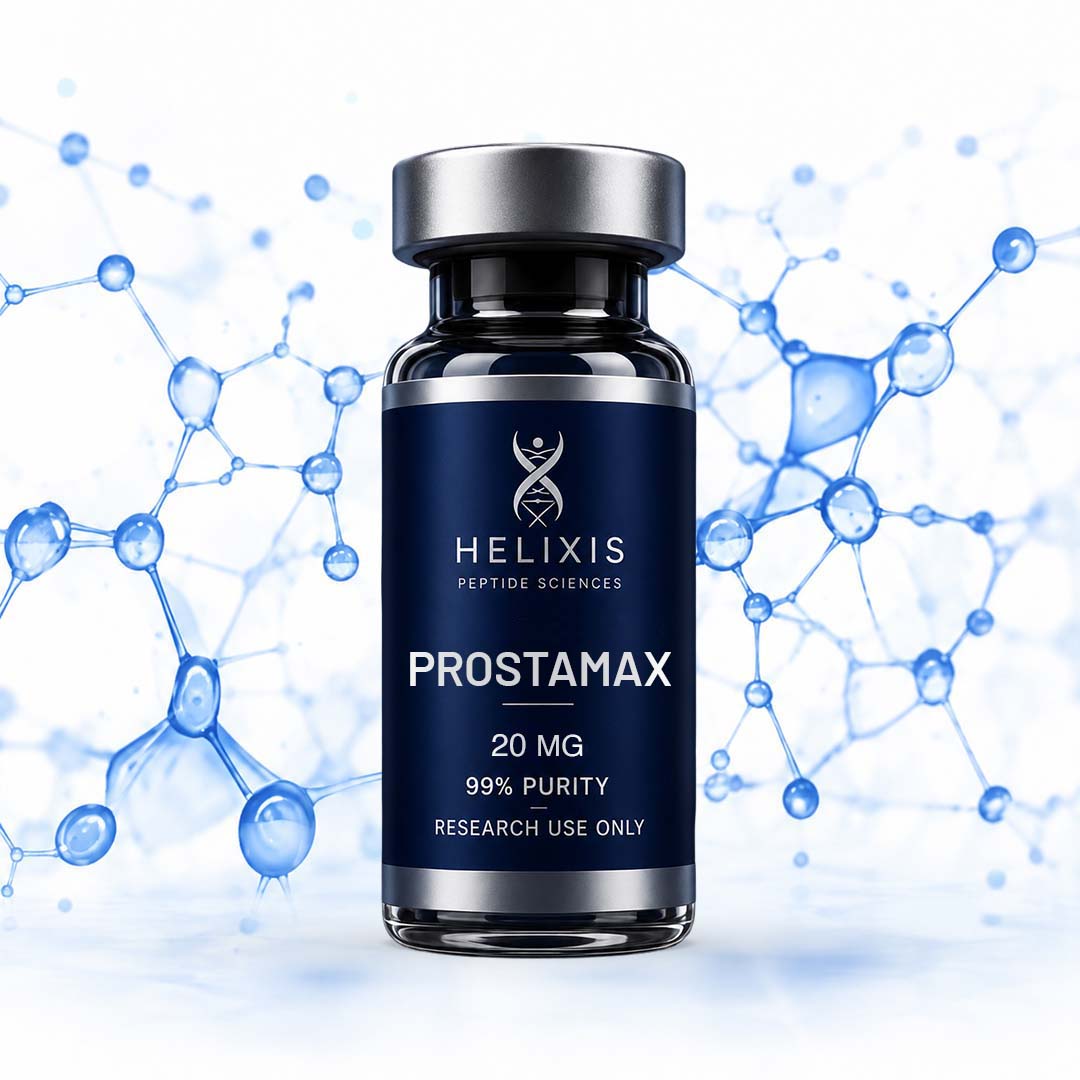
Prostamax 20mg

Prostamax 20mg
Prostamax is a synthetic tetrapeptide bioregulator (Lys-Glu-Asp-Pro, KEDP) derived from prostate tissue peptide complex research. Short peptides of this class have been studied for their ability to modulate gene expression through epigenetic interactions
|
Vial Size
|
Dose Range
|
Schedule
|
Primary Goal
|
|---|---|---|---|
| 20 mg vial | 500 mcg to 1 mg daily with gradual titration. | Support prostate tissue health research through bioregulatory peptide signaling. | Support prostate tissue health research through bioregulatory peptide signaling. |
Reconstitution Summary
Storage Summary
Prostamax 20mg
Reconstitution Steps
- Draw 2 mL bacteriostatic water with a sterile syringe.
- Inject slowly down the vial wall; avoid foaming.
- Gently swirl until dissolved (do not shake).
- Label and refrigerate at 2 to 8 °C, protected from light; use within 2 weeks. At 10 mg/mL, 1 unit = 0.01 mL = 100 mcg (0.1 mg) on a U-100 insulin syringe.
How It Works
Prostamax (KEDP) belongs to the class of short bioregulatory peptides studied by Khavinson and colleagues. These tetrapeptides are proposed to modulate gene expression through epigenetic mechanisms, interacting with chromatin structure and histone proteins. In aged human lymphocytes, KEDP has been observed to cause pericentromeric chromatin decondensation, potentially reactivating suppressed genes. Preclinical rat models of prostatitis showed that IM administration of KEDP reduced inflammatory markers and helped prevent fibrotic changes in prostate tissue.
Benefits & Side Effects
- In rat prostatitis models, IM KEDP administration reduced inflammation and supported tissue
normalization over 15 to 60 days. - Studies in benign prostatic hyperplasia models showed favorable effects on prostate weight and
histological parameters. - Short bioregulatory peptides of this class generally show favorable tolerability profiles in preclinical work.
- Potential for mild injection-site reactions (redness, tenderness) as with any IM administration; rotate sites
to minimize. - Human clinical trial data are not yet published; dosing is extrapolated from animal models.
References & Scientific Literature
- Experimental study of Prostamax efficiency in chronic aseptic prostatitis therapy (Modern Research in Inflammation, 2013).
- Effects of short peptides on lymphocyte chromatin in senile subjects (Bulletin of Experimental Biology and Medicine, 2004).