
Tirzepatide 10mg

Tirzepatide 10mg
Tirzepatide is a 39 amino acid dual incretin receptor agonist that activates both GLP-1 and GIP receptors, enhancing glucose-dependent insulin secretion, suppressing glucagon, slowing gastric emptying, and reducing appetite.
|
Vial Size
|
Dose Range
|
Schedule
|
Primary Goal
|
|---|---|---|---|
| 10mg vial | 2.5 to 15 mg weekly with 4-week titration intervals. | Weekly subcutaneous injection on the same day each week for 12 to 16+ weeks. | Support glycemic control, weight management, and metabolic health through dual incretin receptor activation. |
Reconstitution Summary
Storage Summary
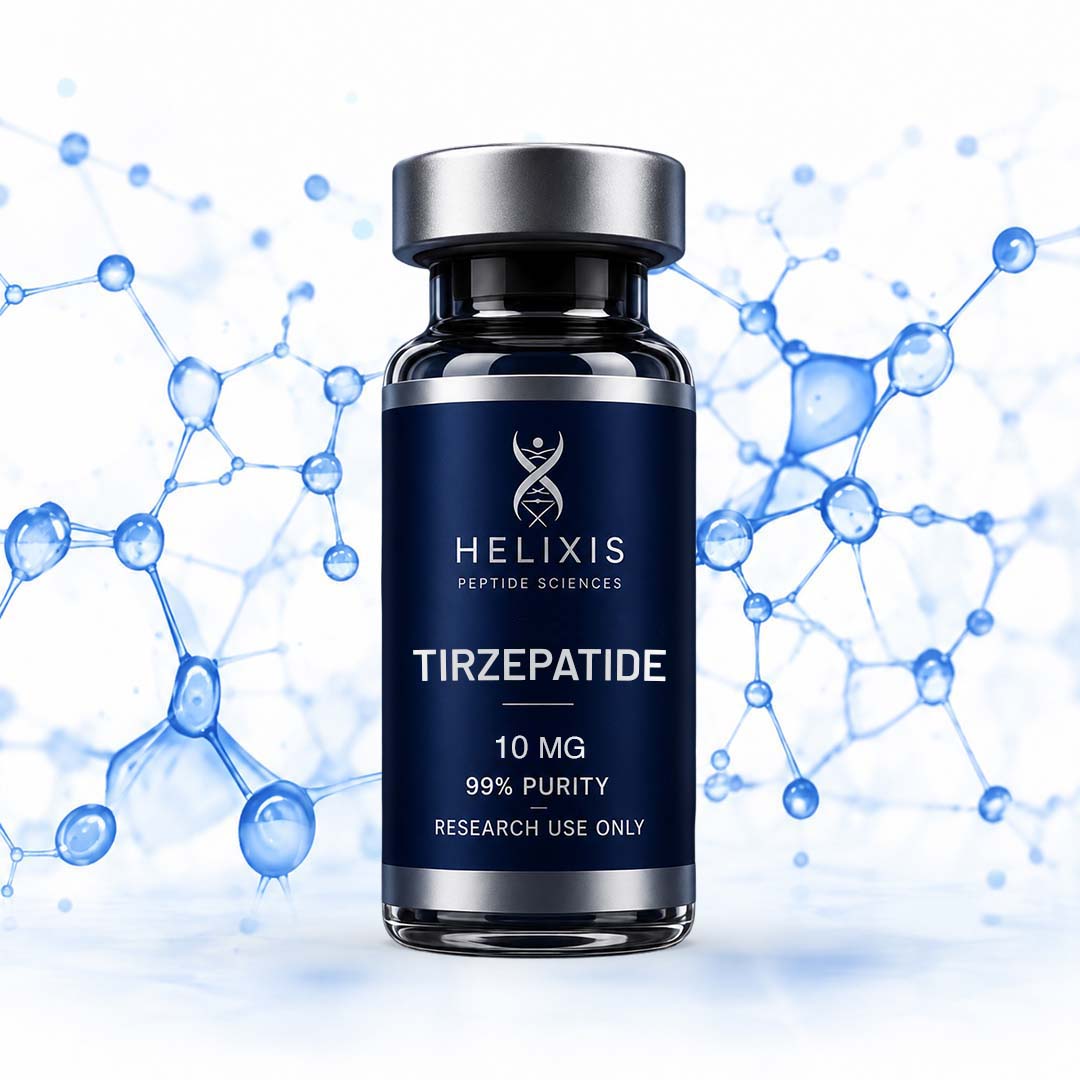
Tirzepatide 10mg
Reconstitution Steps
- Draw 1 mL bacteriostatic water with a sterile syringe.
- Inject slowly down the vial wall; avoid foaming.
- Gently swirl until dissolved (do not shake).
- Label with reconstitution date and refrigerate at 2 to 8 °C, protected from light.
- Use within 28 days of reconstitution. At 5.0 mg/mL, 1 unit = 0.01 mL = 50 mcg on a U-100 insulin syringe.
How It Works
Tirzepatide is a novel dual agonist that simultaneously activates GLP-1 (glucagon-like peptide-1) and GIP (glucose-dependent insulinotropic polypeptide) receptors. This dual mechanism enhances glucose-dependent insulin secretion while suppressing glucagon release, slowing gastric emptying, and promoting satiety through central appetite regulation. The added GIP activity appears to synergistically amplify metabolic effects beyond GLP-1 alone, contributing to superior weight reduction observed in clinical trials. Its approximately 5 day half-life enables convenient once-weekly administration.
Benefits & Side Effects
- Glycemic control: Significant HbA1c reductions in type 2 diabetes trials.
- Weight reduction: Clinical trials report substantial body-weight loss (up to ~11 kg more than GLP-1 RA
comparators over 26 weeks at higher doses). - Cardiovascular markers: Improvements in lipid profiles and blood pressure observed in some studies.
- Common side effects: Gastrointestinal (nausea, diarrhea, vomiting, constipation), typically mild to
moderate and dose-dependent; gradual titration reduces incidence. - Injection-site reactions: Occasional mild redness or irritation at subcutaneous injection sites.
References & Scientific Literature
- Farzam K, Patel P. Tirzepatide (StatPearls / NCBI Bookshelf, 2024).
- Gallwitz B. GIP/GLP-1 receptor agonist Tirzepatide for type 2 diabetes and obesity (Frontiers in Endocrinology, 2022).
- Frias JP, et al. Efficacy and safety of LY3298176 (Tirzepatide) Phase 2 trial (The Lancet, 2018).
- Jastreboff AM, et al. Tirzepatide once weekly for treatment of obesity (NEJM, 2022).