
AHK-Cu

AHK-Cu
AHK-Cu is a copper-binding tripeptide composed of alanine, histidine, and lysine (Ala-His-Lys) complexed with copper(II).
|
Vial Size
|
Dose Range
|
Schedule
|
Primary Goal
|
|---|---|---|---|
| 10mg vial | Research concentration determined according to the experimental model and formulation. | Study-dependent; no established standardized human administration schedule. | Research into hair-follicle biology, dermal papilla cells, skin signaling, and copper-peptide activity. |
Reconstitution Summary
Reconstitute according to the product-specific Certificate of Analysis and formulation instructions
Storage Summary
Store lyophilized material according to product specifications; after reconstitution, refrigerate as specified and avoid repeated freeze-thaw cycles.
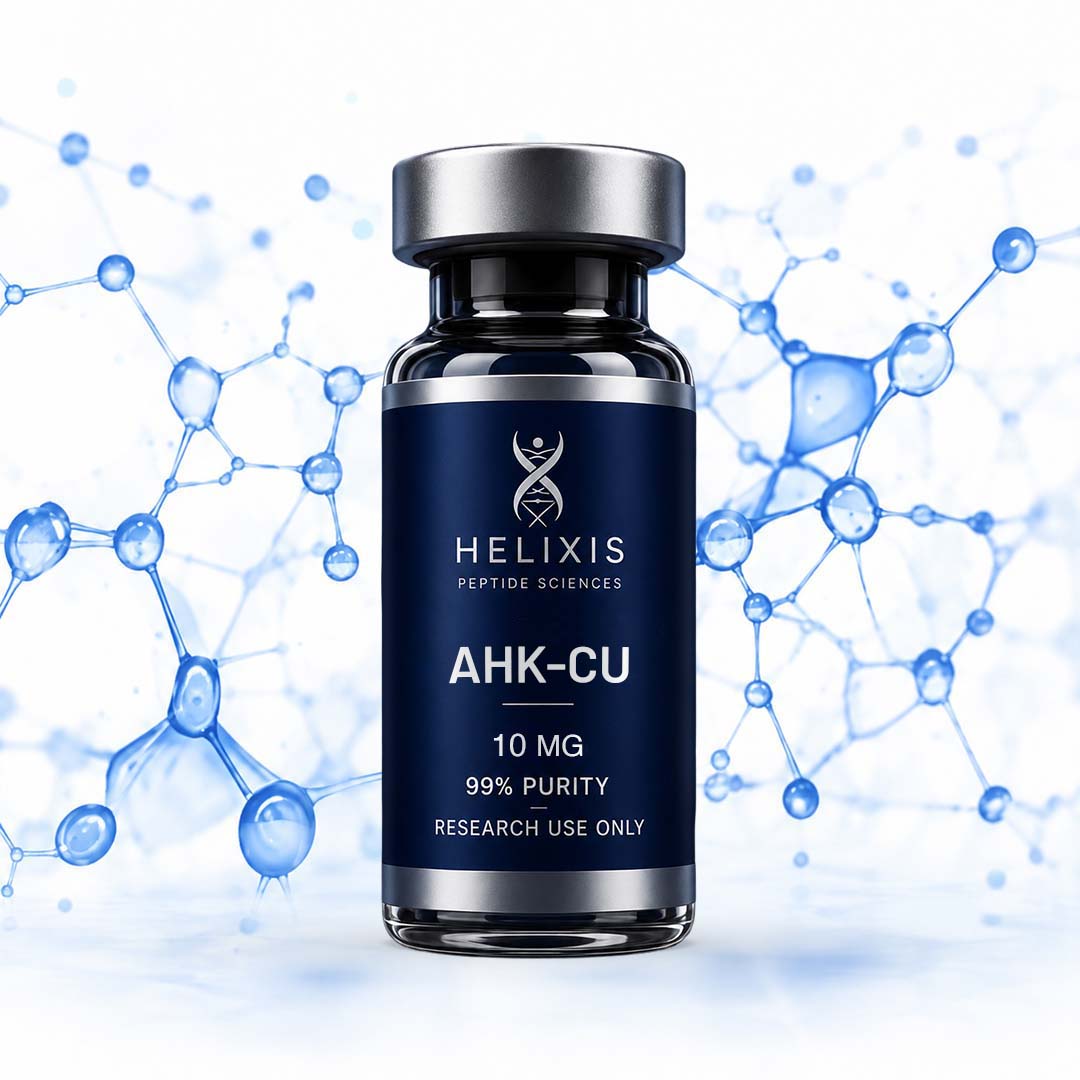
Recommended Product
AHK-Cu
Reconstitution Steps
- Review the product-specific Certificate of Analysis before reconstitution.
- Use the specified sterile diluent and volume for the supplied formulation.
- Add the diluent slowly down the vial wall to minimize foaming.
- Gently swirl until dissolved; do not vigorously shake.
- Label and store according to the product-specific storage instructions.
How It Works
AHK-Cu is the copper(II) complex of the tripeptide alanine-histidine-lysine (AHK). The histidine residue participates in copper coordination, forming a copper-peptide complex that is investigated in cellular and dermatological research. Studies of AHK-Cu have particularly examined dermal papilla cells, hair-follicle elongation, cellular proliferation, and signaling associated with follicular biology
Benefits & Side Effects
- Research has investigated AHK-Cu in hair-follicle and dermal-papilla-cell models.
- Experimental studies have reported effects on dermal papilla cell proliferation.
- AHK-Cu has been investigated for hair-follicle elongation in ex-vivo models.
- Research also examines skin and copper-peptide signaling pathways.
- Human clinical evidence specific to AHK-Cu remains limited, so laboratory findings should not be presented as established therapeutic benefits
References & Scientific Literature
- The effect of tripeptide-copper complex on human hair growth in vitro. Archives of Pharmacal Research (2007).
- Research on AHK-Cu and dermal papilla cell proliferation.
- Research examining AHK-Cu in human hair-follicle models.
- Reviews of copper-tripeptide biology and related signaling pathways